
What's Happening?
The U.S. dollar strengthened following the release of strong employment data for May, which showed an increase of 172,000 jobs. This data has heightened expectations of potential interest rate hikes by
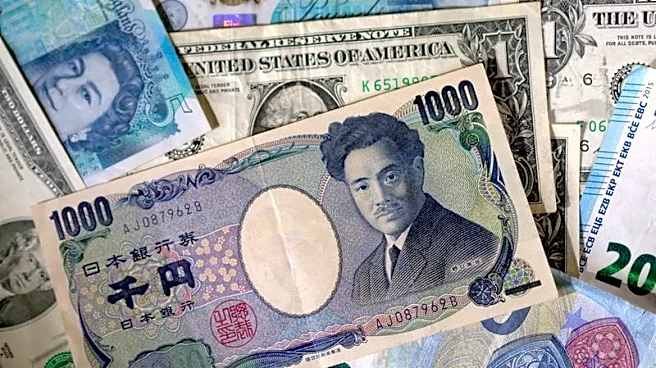
the Federal Reserve. The dollar's rise has put pressure on the Japanese yen, which has been testing the 160-per-dollar barrier. Japanese officials have issued warnings about potential intervention to address excessive volatility. The yen's decline is partly due to safe-haven demand amid Middle East tensions and rising energy costs.
Why It's Important?
The strengthening of the dollar has significant implications for global markets, particularly for countries with weaker currencies. A stronger dollar can impact international trade, making U.S. exports more expensive and imports cheaper. This shift can affect the balance of trade and economic growth in various regions. The pressure on the yen highlights the challenges faced by Japan in managing currency stability amid external economic pressures. The situation underscores the interconnectedness of global economies and the influence of U.S. monetary policy on international markets.
What's Next?
The Federal Reserve's upcoming meetings will be closely watched for any signals of interest rate changes. Japan may consider intervention strategies to stabilize the yen if volatility persists. Global markets will continue to react to developments in U.S. monetary policy and geopolitical tensions, particularly in the Middle East. The outcomes of these events will influence currency markets, trade dynamics, and economic forecasts worldwide.