






What's Happening?
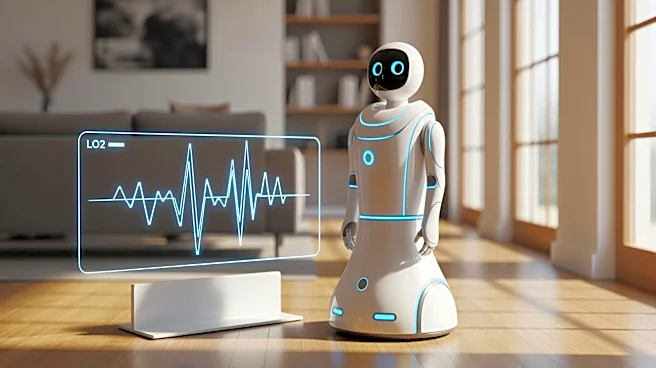
Rhem Labs has announced the launch of Rhem, an AI-powered home robot designed to monitor and manage family health. The device, which will be available on Kickstarter starting July 20, is equipped with sensors to measure vital health indicators such as blood
pressure, heart rate, SpO2, body temperature, and ECG. Additionally, it monitors indoor air quality, detecting levels of CO2, formaldehyde, and potential gas leaks. Rhem's onboard AI engine processes these readings, providing personalized wellness guidance and managing health-related tasks like scheduling appointments and finding nearby healthcare facilities. The device aims to simplify health management by bringing these capabilities into the home, reducing the need for external appointments and paperwork.
Why It's Important?
The introduction of Rhem represents a significant shift in how families can manage health care, emphasizing convenience and proactive health management. By integrating multiple health monitoring functions into a single device, Rhem reduces the need for frequent visits to healthcare providers, potentially lowering healthcare costs and improving access to health information. This innovation could particularly benefit families with elderly members or those with chronic health conditions, offering real-time health insights and immediate action plans. The device's ability to keep data private by processing it locally rather than in the cloud addresses privacy concerns, making it a potentially attractive option for health-conscious consumers.
What's Next?
As Rhem launches on Kickstarter, its success will likely depend on consumer interest and feedback. If successful, Rhem Labs may expand its product line or enhance the device's capabilities. The healthcare industry and tech companies will be watching closely, as Rhem's approach could inspire similar innovations in home health technology. Additionally, healthcare providers might explore partnerships with Rhem Labs to integrate their services with the device, potentially creating a new model for home-based health care.
Beyond the Headlines
Rhem's development highlights a growing trend towards integrating AI and robotics in everyday life, particularly in health management. This shift raises questions about the future role of technology in personal health care and the potential for AI to reduce the burden on traditional healthcare systems. Ethical considerations, such as data privacy and the reliance on technology for health decisions, will need to be addressed as these devices become more prevalent. The success of Rhem could pave the way for broader acceptance and innovation in AI-driven health solutions.