


What's Happening?
The U.S. Department of Treasury has issued a general license allowing the sale of Iranian oil and petrochemical products that are currently loaded onto tankers. This decision is part of an effort to counteract rising oil prices caused by the ongoing conflict
in the Middle East. The license permits the sale of energy products already on vessels as of a recent Friday, with purchases authorized through April 19. This move follows similar actions taken for Russian oil to alleviate a severe fuel supply crunch. The majority of Iran's oil is currently purchased by Chinese customers, primarily independent refiners. While the U.S. waiver could expand the pool of potential buyers, new customers would still face challenges due to existing restrictions on Iran, including limited access to international financial markets. The conflict has significantly disrupted shipments through the Strait of Hormuz, a critical passage for global oil transit, leading to a sharp increase in oil prices.
Why It's Important?
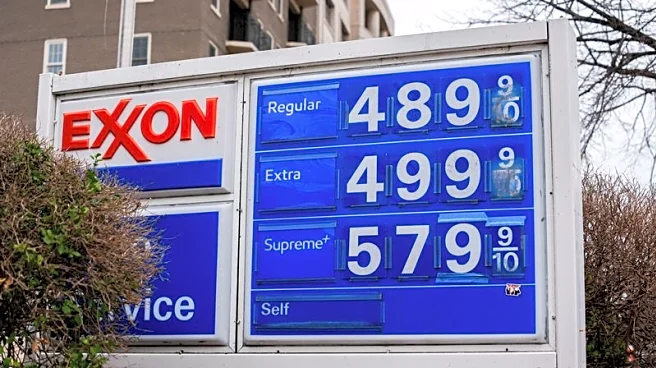
The U.S. decision to allow the sale of stranded Iranian oil is significant as it aims to stabilize fuel prices, which have surged due to the Middle East conflict. The spike in oil prices is exerting pressure on the U.S. economy, affecting consumers and potentially influencing political dynamics ahead of the November midterm elections. Prolonged inflationary pressures could impact the Republican Party's ability to maintain control of Congress, which is crucial for President Trump's legislative agenda. The measure is also a strategic move to manage domestic economic challenges while navigating international sanctions and geopolitical tensions. The authorization is expected to release approximately 140 million barrels of oil, although Iran disputes the availability of such a surplus.
What's Next?
The U.S. administration may continue to explore additional measures to manage fuel prices and mitigate economic impacts. This could include further releases from strategic reserves or additional waivers. The political implications of rising fuel prices will likely remain a focal point in the lead-up to the midterm elections, influencing both domestic and foreign policy decisions. The situation in the Middle East and its impact on global oil markets will continue to be closely monitored, with potential adjustments to U.S. policy as necessary.