


What's Happening?
Enrique Martínez Celaya, a Cuban American artist, is showcasing his latest exhibition, 'The Sextant,' at the Wende Museum in Culver City. This exhibition is the final part of a trilogy that delves into his childhood experiences in Cuba during the Cold
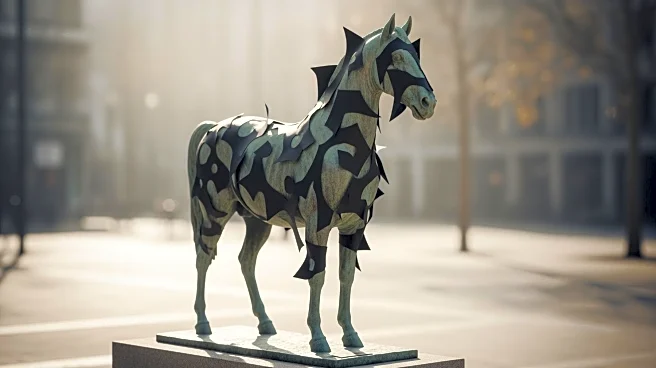
War. The centerpiece of the exhibition is a full-scale re-creation of his childhood home, coated with 6,500 pounds of sugar, symbolizing the industrial production in his hometown. The installation includes a horse sculpture pulling a sleigh of sugar, which crashes through the roof of the house. The exhibition is imbued with themes of memory, exile, and the passage of time, reflecting the impact of the Cold War on the artist and his family. Martínez Celaya's work often incorporates autobiographical elements, using them as a means to explore broader truths and revelations.
Why It's Important?
This exhibition is significant as it highlights the enduring impact of historical events on personal and collective memory. By using sugar as a medium, Martínez Celaya not only references the economic history of Cuba but also creates a ghostly, poetic atmosphere that invites viewers to reflect on themes of displacement and longing. The exhibition at the Wende Museum, known for its focus on Cold War history, provides a fitting context for this exploration. It underscores the relevance of art in addressing complex historical narratives and personal experiences, offering a space for dialogue and reflection on the broader implications of exile and memory in the 20th century.
What's Next?
The exhibition is open to the public until October 11, with Martínez Celaya scheduled to lead a public walkthrough on February 27. This event will provide attendees with deeper insights into the artist's creative process and the thematic underpinnings of the exhibition. As the exhibition continues, it may inspire further discussions on the role of art in preserving and interpreting historical and personal narratives. The Wende Museum's focus on Cold War history may also attract visitors interested in exploring the intersection of art and history.
Beyond the Headlines
Martínez Celaya's work challenges the notion that painting is a dying art form, emphasizing its continued viability and relevance. His use of painting as a medium to convey complex emotions and historical narratives highlights the enduring power of traditional art forms in a digital age. The exhibition also raises questions about the role of personal history in shaping artistic expression and the ways in which art can serve as a bridge between personal and collective experiences.