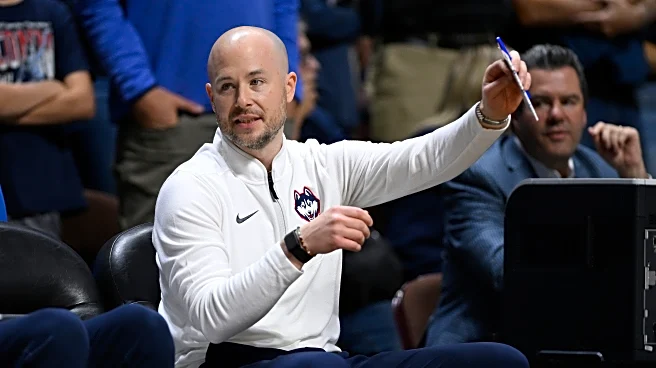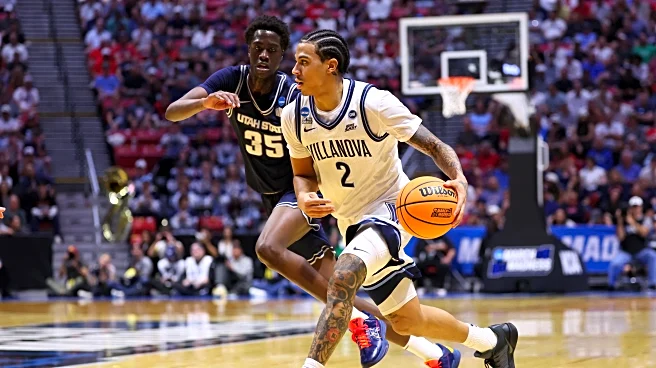


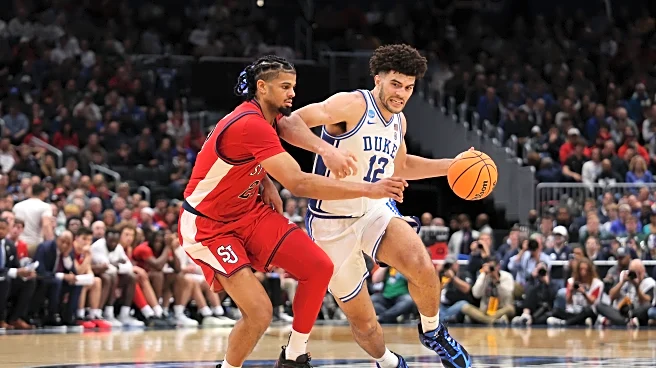

What's Happening?
The Big East conference has long been a powerhouse in college basketball, producing legendary players and memorable moments. One of the most iconic figures in its history is Patrick Ewing, who played for Georgetown University. Ewing's tenure at Georgetown was
marked by significant achievements, including leading the Hoyas to an NCAA championship in 1984 and multiple Final Four appearances. Known for his defensive prowess, Ewing dominated the Big East in blocks throughout his college career, although the NCAA did not officially recognize this statistic until after his time. His influence on the court was profound, contributing to Georgetown's impressive record of 121-23 during his four seasons. Ewing's legacy is a testament to the competitive spirit and talent that the Big East has consistently showcased, making it a staple in college basketball history.
Why It's Important?
Patrick Ewing's impact on the Big East and college basketball at large underscores the conference's role in shaping the sport's landscape. The Big East has been instrumental in developing top-tier talent, which has translated into high viewership and popularity for college basketball. Ewing's success at Georgetown not only elevated the program but also set a standard for future players in the conference. The Big East's ability to produce such talent has significant implications for the NCAA tournament, where it consistently fields competitive teams. This, in turn, affects broadcasting rights, sponsorships, and the overall economic landscape of college sports. Ewing's legacy continues to inspire young athletes, reinforcing the Big East's reputation as a breeding ground for basketball excellence.
What's Next?
As the Big East continues to evolve, it remains a key player in the NCAA landscape. The conference's ability to attract and develop talent will be crucial in maintaining its competitive edge. Future prospects will look to the legacy of players like Patrick Ewing as a benchmark for success. The ongoing development of the conference's programs will likely influence recruitment strategies and the overall dynamics of college basketball. Additionally, the Big East's performance in upcoming NCAA tournaments will be closely watched, as it seeks to uphold its tradition of excellence and continue its contribution to the sport's rich history.
Beyond the Headlines
The legacy of Patrick Ewing and the Big East extends beyond the basketball court, touching on cultural and social dimensions. Ewing's success story is one of perseverance and dedication, serving as an inspiration to many aspiring athletes. The Big East's prominence in college basketball also highlights the importance of sports in educational institutions, fostering community spirit and school pride. Moreover, the conference's history of producing successful athletes contributes to discussions about the role of college sports in professional career development. As the Big East continues to thrive, it will remain a symbol of the enduring impact of college athletics on American culture.