




What's Happening?
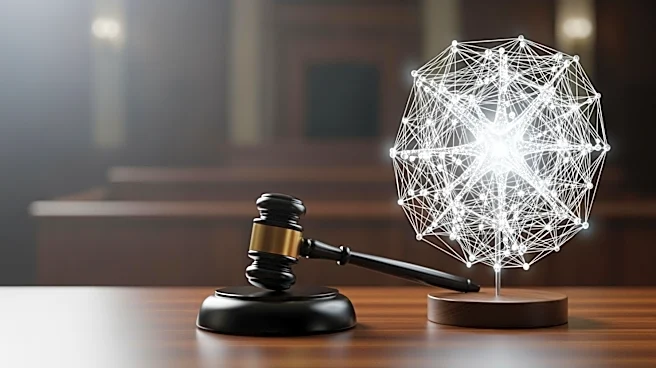
A recent court ruling has brought attention to the issue of copyright protection for AI-generated works. In the case of Thaler v. Perlmutter, the Court of Appeals for the District of Columbia decided that works generated autonomously by AI systems cannot
be protected by copyright, as copyright requires a human author. The Supreme Court declined to review this decision, leaving the lower court's ruling in place. This decision has significant implications for the entertainment industry, which relies heavily on copyright to monetize intellectual property. As AI-generated content becomes more prevalent on platforms like YouTube and TikTok, traditional media companies are cautious about incorporating AI into their core operations without clear copyright protections. The entertainment industry is incentivized to keep human creators involved to maintain strong copyright protection, which is essential for licensing and monetizing content.
Why It's Important?
The ruling has major economic implications for creative industries, as copyright is crucial for monetizing intellectual property. Without copyright protection, anyone could copy or distribute works for free, undermining the financial model of industries like film, television, music, and book publishing. The decision also highlights the tension between cost-saving measures and the need for human involvement in creative processes. While AI can reduce production costs, the lack of copyright protection for AI-generated content means that companies must continue to employ human creators to ensure their works are protected and monetizable. This decision could slow the displacement of human labor in creative industries, as companies are disincentivized from relying solely on AI-generated content.
What's Next?
The future of AI-generated content in creative industries will likely depend on further legal clarifications regarding the extent of human involvement required for copyright protection. Courts may need to establish guidelines on how much AI content can be incorporated into a work before it becomes uncopyrightable. Additionally, there may be increased pressure on courts and regulators to impose penalties for misrepresenting AI involvement in copyright registrations. As AI-generated content becomes harder to distinguish from human-authored work, the temptation to pass off AI-generated content as human-made will grow, necessitating stronger enforcement measures.
Beyond the Headlines
The debate over AI-generated content and copyright raises broader questions about the value of human creativity and the role of technology in artistic expression. While AI tools offer new possibilities for creative experimentation, the reliance on human authorship for copyright protection underscores the importance of human creativity in producing works that resonate with audiences. The decision also reflects a growing demand for curation in an era of abundant content, as audiences seek trusted intermediaries to help them navigate the vast array of available media.