






What's Happening?
Gold prices have dipped as U.S. equities reached record highs, driven by hopes of a potential U.S.-Iran deal. Spot gold is trading at approximately $4,507.40 per ounce, down 1.38%, while spot silver is also lower. The decline in gold prices is attributed
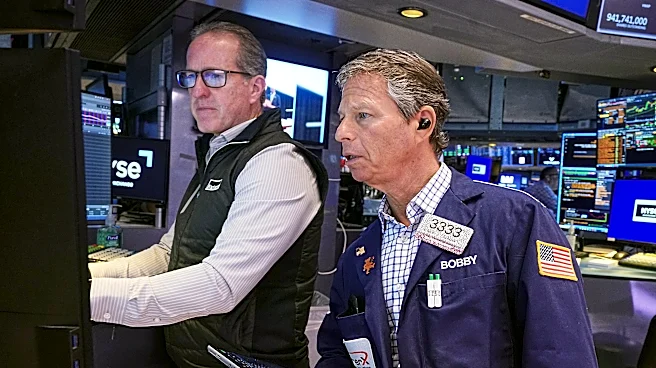
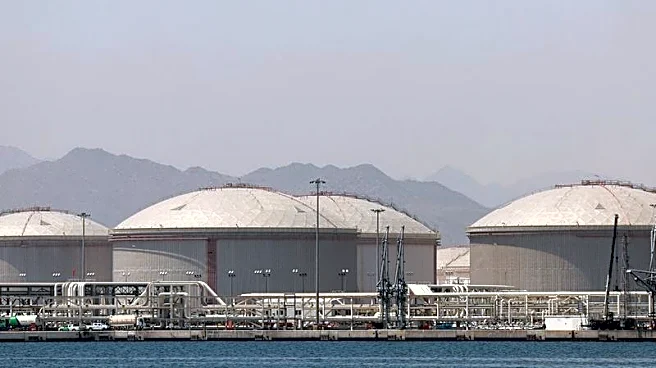
to a firmer U.S. dollar and renewed uncertainty in the Middle East. U.S. forces conducted defensive strikes on Iranian targets, raising concerns about the stability of a ceasefire. Despite these tensions, U.S. equities have surged, with the S&P 500 and Nasdaq Composite reaching new highs, buoyed by optimism over a possible agreement with Iran that could ease oil supply constraints.
Why It's Important?
The divergence between gold prices and U.S. equities highlights the complex interplay between geopolitical events and market sentiment. While gold typically serves as a safe-haven asset during times of uncertainty, the prospect of a U.S.-Iran deal has bolstered investor confidence in equities, leading to record market highs. This situation underscores the importance of geopolitical developments in shaping market dynamics and influencing investment strategies. For investors, the current environment presents both opportunities and risks, as they navigate the potential impacts of geopolitical agreements on commodity and equity markets.
What's Next?
The potential for a U.S.-Iran agreement will be closely monitored by investors, as it could have significant implications for global oil supply and inflation expectations. Any developments in the negotiations could influence market sentiment and impact both commodity and equity prices. Additionally, economic indicators, such as consumer confidence and inflation data, will play a crucial role in shaping market expectations. Investors will need to stay informed and agile to adapt to the evolving geopolitical and economic landscape.