




What's Happening?
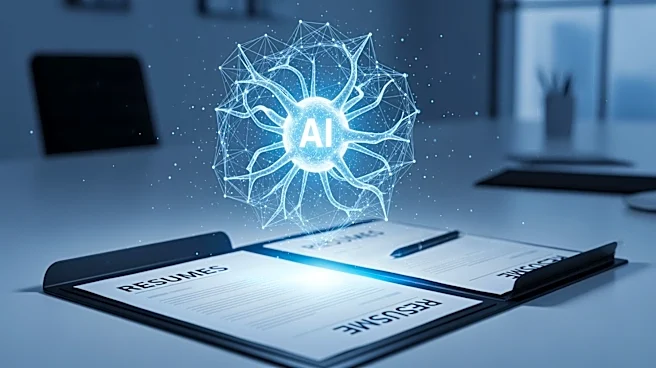
The traditional résumé is becoming obsolete as companies increasingly favor job tryouts over paper applications. This shift is driven by the influx of AI-generated résumés that are polished and similar, making it difficult for hiring managers to differentiate
candidates. As a result, companies are opting for live tests and work trials to assess candidates' skills and compatibility with the company culture. This approach allows employers to evaluate technical abilities and collaboration skills in real-time, while also assessing candidates' proficiency with AI tools. This trend reflects a broader change in hiring practices, emphasizing practical demonstrations of skills over traditional paper credentials.
Why It's Important?
This development marks a significant transformation in the job market, impacting both employers and job seekers. For companies, it offers a more reliable method of assessing candidates' capabilities and fit for the role, potentially leading to better hiring decisions. For job seekers, it presents both challenges and opportunities, as they must now demonstrate their skills in practical settings rather than relying solely on written applications. This shift could also influence educational institutions to adapt their curricula to better prepare students for these new hiring practices, emphasizing experiential learning and real-world applications.
What's Next?
As this trend gains traction, more companies are likely to adopt job tryouts as a standard part of their hiring process. This could lead to a reevaluation of how skills and qualifications are assessed, with a greater focus on practical experience and adaptability. Job seekers may need to develop new strategies to showcase their abilities, such as building portfolios or engaging in freelance work to gain relevant experience. Additionally, the role of AI in hiring processes will continue to evolve, potentially leading to new tools and technologies that further streamline candidate evaluation.
Beyond the Headlines
The move away from traditional résumés also raises questions about the future of job applications and the role of technology in hiring. As AI continues to influence recruitment practices, there may be ethical considerations regarding privacy and bias in candidate evaluation. Furthermore, this shift could impact the job market dynamics, as candidates who excel in practical settings may have an advantage over those who are more traditionally qualified on paper. This could lead to a more diverse and dynamic workforce, as employers prioritize skills and potential over formal credentials.