



What's Happening?
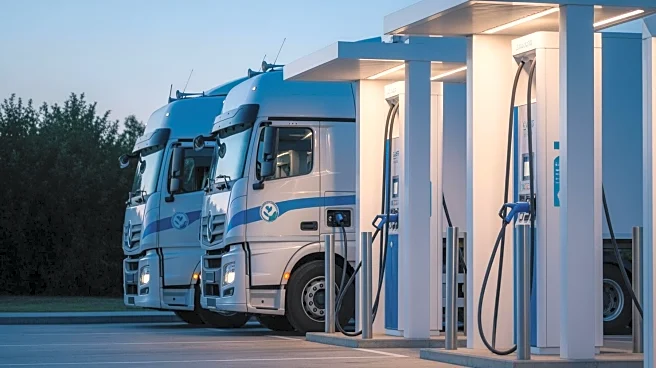
Schneider National has achieved a significant milestone by surpassing 10 million zero-emission miles with its Freightliner eCascadia electric fleet, which includes nearly 100 battery electric vehicles (BEVs). This achievement is part of Schneider's broader
strategy to enhance supply chain efficiency and reduce carbon emissions. The company has implemented driver training and efficiency tools that save over 335,000 gallons of fuel annually. Additionally, Royal Waste Services has expanded its zero-emission fleet in New York by adding three new Mack LR Electric refuse trucks. This expansion is supported by a voucher incentive program and aligns with state initiatives to reduce greenhouse gas emissions. Cummins has also introduced a $500 incentive for owners of eligible Ram 2500 and 3500 trucks who complete Emissions Recall 67A, with the first 750 participants receiving $1,000.
Why It's Important?
The expansion of electric fleets by companies like Schneider and Royal Waste highlights a growing trend towards sustainable transportation solutions in the U.S. This shift is crucial for reducing the transportation sector's carbon footprint, which is a significant contributor to greenhouse gas emissions. The incentives offered by Cummins further encourage compliance with emissions standards, promoting cleaner air and environmental health. These developments not only benefit the environment but also offer economic advantages, such as reduced fuel costs and maintenance savings, which can enhance the competitiveness of companies adopting these technologies.
What's Next?
As more companies invest in electric vehicles and related infrastructure, the transportation industry is likely to see increased adoption of zero-emission technologies. This could lead to further regulatory support and incentives from government bodies to accelerate the transition. Companies may also explore partnerships and collaborations to enhance the efficiency and reach of their electric fleets. The success of these initiatives could influence other sectors to adopt similar sustainable practices, contributing to broader environmental goals.