




What's Happening?
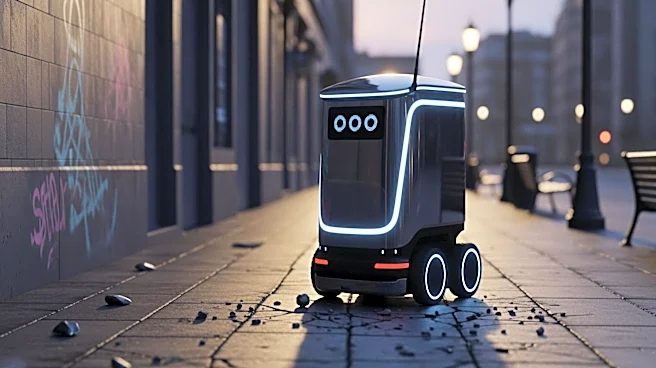
In Philadelphia, Uber Eats has introduced Avride autonomous delivery robots, which have been operational for about a month. These robots, described as 'the future of delivery,' have faced resistance from local residents. Incidents of vandalism have been reported,
including a robot being kicked multiple times in the Center City neighborhood. Despite these challenges, the robots continue to operate, with Avride stating that such reactions are common as people adjust to new technology. The robots are designed to stop and wait if someone interferes, resuming their route once the interaction ends. The delivery service is available from 10 a.m. to 10 p.m. in several Philadelphia neighborhoods, and the robots are equipped with LIDAR sensors and cameras to navigate city streets.
Why It's Important?
The introduction of delivery robots in urban areas like Philadelphia represents a significant shift in how goods are delivered, potentially impacting local economies and employment. While businesses may benefit from increased delivery capabilities, especially during adverse weather conditions, the public's reaction highlights the challenges of integrating autonomous technology into daily life. The incidents of vandalism suggest a societal resistance to automation, which could influence future deployments and the development of regulations governing robotic operations. The situation underscores the need for public education and engagement to facilitate smoother transitions to automated services.
What's Next?
As Uber Eats and Avride continue to expand their robotic delivery services, they may need to address public concerns and improve community relations to prevent further incidents. This could involve public awareness campaigns or partnerships with local organizations to demonstrate the benefits of robotic deliveries. Additionally, monitoring and adjusting the robots' operations based on public feedback could help mitigate negative reactions. The company may also explore technological enhancements to improve the robots' interactions with pedestrians and ensure safety and efficiency in urban environments.
Beyond the Headlines
The deployment of delivery robots raises broader questions about the future of work and the role of automation in society. As robots take on tasks traditionally performed by humans, there may be implications for employment, particularly in sectors reliant on low-skilled labor. This shift could necessitate policy interventions to support workers displaced by automation. Furthermore, the ethical considerations of deploying autonomous machines in public spaces, including privacy and safety concerns, will likely become more prominent as the technology becomes more widespread.