




What's Happening?
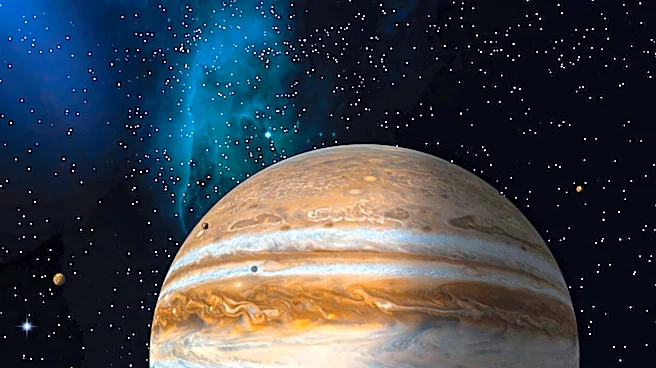
In May, the night sky will feature prominent appearances by Venus and Jupiter, along with a rare 'blue moon' event. Venus, known as the 'evening star,' will continue to shine brightly in the western sky after sunset, due to its proximity to Earth and reflective
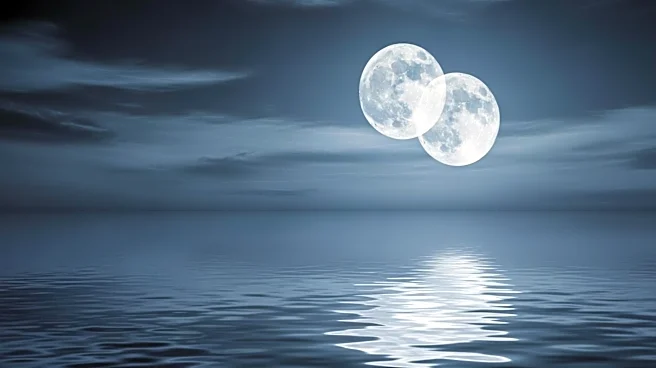
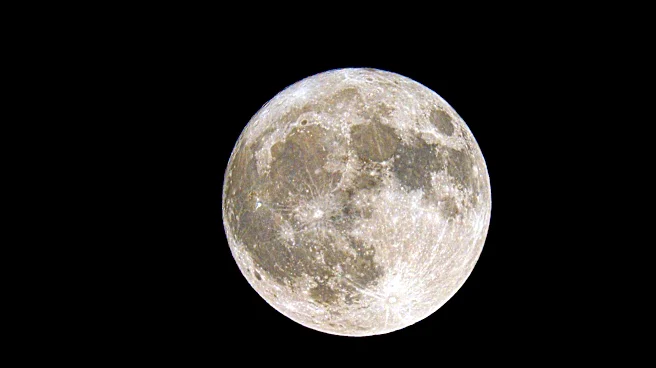
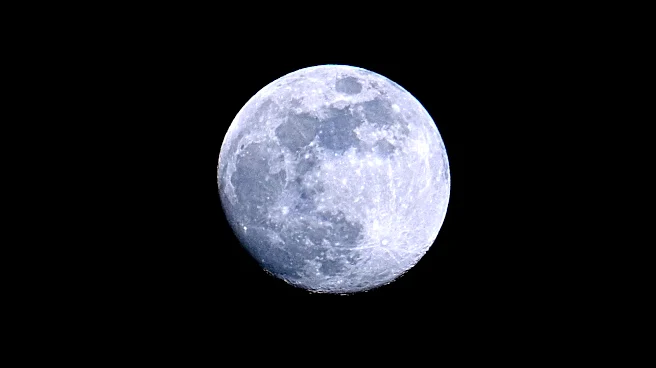
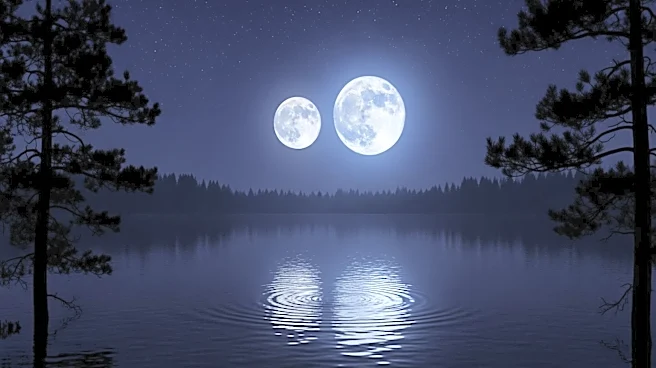
cloud cover. Jupiter will also be visible, though not as bright as Venus. This month will see two full moons, with the first on May 1 and the second on May 31, leading to the occurrence of a 'blue moon.' The term 'blue moon' refers to the rarity of having two full moons in a single month. The first full moon of May is called the 'Flower Moon,' while the second is the 'blue moon.' Additionally, the International Space Station will be visible in the early morning hours on specific dates.
Why It's Important?
The celestial events in May offer a unique opportunity for skywatchers and astronomers to observe and study planetary alignments and lunar cycles. The visibility of Venus and Jupiter provides a chance to explore planetary movements and their positions relative to Earth. The occurrence of a 'blue moon' is a rare event that highlights the intricacies of the lunar cycle and its interaction with the Gregorian calendar. These events can inspire interest in astronomy and provide educational opportunities for the public. The visibility of the International Space Station also offers a glimpse into human achievements in space exploration.