



What's Happening?
Copenhagen-based AgTech startup Mycoverse has successfully raised €2.4 million in pre-seed equity financing to advance its biological crop protection platform. This platform utilizes fungi to replace or reduce the use of chemical pesticides. The funding
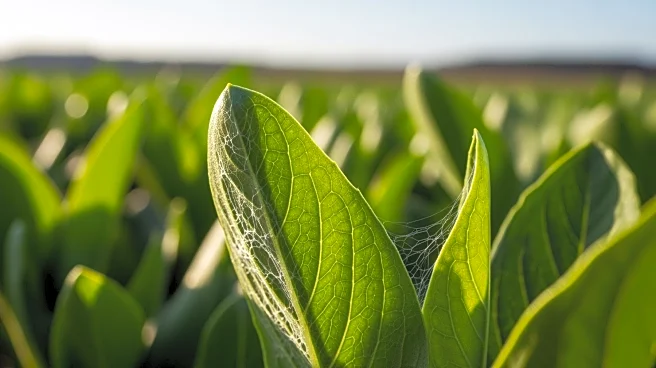
round was co-led by Future Food Fund and High-Tech Gründerfonds, with additional participation from PINC, the venture arm of Finnish food company Paulig. Including previous support from Denmark’s BioInnovation Institute, Mycoverse’s total funding now stands at approximately €4.3 million. The startup aims to develop a product targeting Phytophthora infestans, the organism responsible for potato late blight, a significant agricultural challenge. Mycoverse plans to integrate its biological solutions into existing farming practices without requiring major changes.
Why It's Important?
The development of biological crop protection methods is crucial as the agricultural industry seeks sustainable alternatives to chemical pesticides. Mycoverse's approach could significantly reduce the environmental impact of farming by offering a natural solution to crop diseases. This innovation aligns with global trends towards sustainable agriculture and could influence regulatory policies that favor environmentally friendly farming practices. The success of Mycoverse could encourage further investment in similar technologies, potentially transforming agricultural inputs and reducing reliance on synthetic chemicals.
What's Next?
Mycoverse plans to use the new capital to expand field trials over the next two years, aiming to validate the performance of its solutions under commercial conditions. The company will also work towards regulatory approval and scaling up its operations. As Europe’s regulatory environment evolves, Mycoverse and similar startups are well-positioned to shape the future of agricultural inputs by bridging scientific innovation with practical farming workflows. The outcome of these trials will be critical in determining the commercial viability and acceptance of biological alternatives by growers.