


What's Happening?
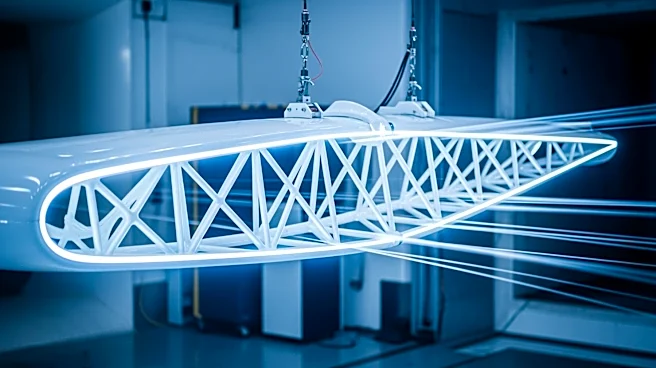
NASA and Boeing have successfully completed wind tunnel testing on a new truss-braced wing design aimed at enhancing aerodynamic efficiency and reducing fuel costs for future airliners. This innovative design features a long, thin wing supported by aerodynamically
shaped structures, representing a significant departure from traditional aircraft designs. The testing, conducted at multiple NASA facilities, involved a semispan model to simulate real-world flight conditions. This collaboration is part of Boeing's Subsonic Ultra Green Aircraft Research (SUGAR) concept, which seeks to revolutionize aircraft design to achieve greater fuel efficiency.
Why It's Important?
The development of the truss-braced wing design is crucial for the aviation industry as it addresses the growing need for more fuel-efficient aircraft. With rising fuel costs and increasing environmental concerns, this design could significantly reduce operational costs and carbon emissions. The collaboration between NASA and Boeing highlights the role of public-private partnerships in advancing aerospace technology. Successful implementation of this design could set a new standard in aircraft manufacturing, benefiting airlines and passengers through lower costs and more sustainable travel options.
What's Next?
Following the successful wind tunnel tests, NASA and Boeing will continue to analyze the data collected to refine the truss-braced wing design. Future steps may include further testing and eventual prototype development. The ongoing research will focus on optimizing the design for commercial use, potentially leading to the production of new aircraft models incorporating this technology. Stakeholders in the aviation industry, including airlines and regulatory bodies, will be closely monitoring these developments as they could influence future aircraft design standards and regulations.