






What's Happening?
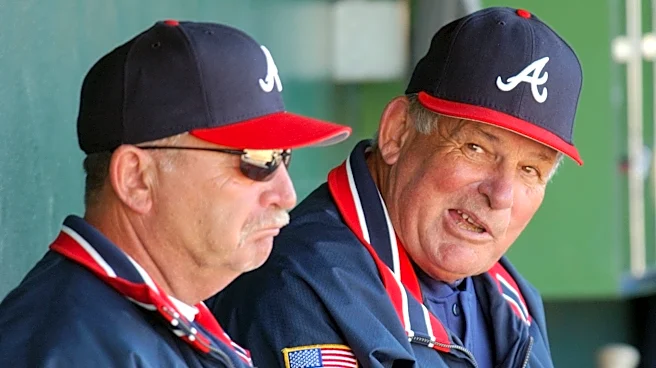
Chipper Jones, the Hall of Fame third baseman, has expressed deep sorrow over the death of his former manager, Bobby Cox, who passed away at the age of 84. Jones, who played under Cox for nearly his entire career with the Atlanta Braves, shared his grief
and admiration for Cox on social media. Cox, a legendary figure in baseball, managed the Braves for 25 seasons, leading them to 15 division titles, five pennants, and a World Series victory. Jones described Cox as a 'second father' and a 'leader of men,' highlighting the profound influence Cox had on him and many others in the Braves organization. The two shared a close bond, with Cox managing Jones from his debut in 1993 until Cox's retirement in 2010.
Why It's Important?
Bobby Cox's passing marks the end of an era for the Atlanta Braves and Major League Baseball. Cox's leadership and strategic acumen were instrumental in transforming the Braves into a dominant force in the 1990s and early 2000s. His legacy is not only reflected in the team's achievements but also in the personal development of players like Chipper Jones, who credits Cox with shaping his career and character. The loss resonates deeply within the baseball community, as Cox was a respected figure known for his dedication and passion for the game. His influence extends beyond the field, impacting the culture and success of the Braves franchise for decades.
What's Next?
The Atlanta Braves and the broader baseball community are likely to honor Bobby Cox's legacy through various tributes and memorials. The team may organize events to celebrate his contributions and achievements, ensuring that his impact is remembered by future generations. Additionally, players and fans will continue to share stories and memories of Cox, reinforcing his enduring influence on the sport. The Braves organization may also consider initiatives to preserve Cox's legacy, such as establishing scholarships or community programs in his name.
Beyond the Headlines
Bobby Cox's management style and philosophy have left a lasting imprint on the game of baseball. Known for his ability to foster team unity and resilience, Cox's approach to leadership serves as a model for current and future managers. His emphasis on player development and mentorship has inspired many within the sport to prioritize these values. As the baseball community reflects on Cox's contributions, there may be renewed discussions about the importance of leadership and mentorship in sports, highlighting the broader cultural and ethical dimensions of his legacy.