


What's Happening?
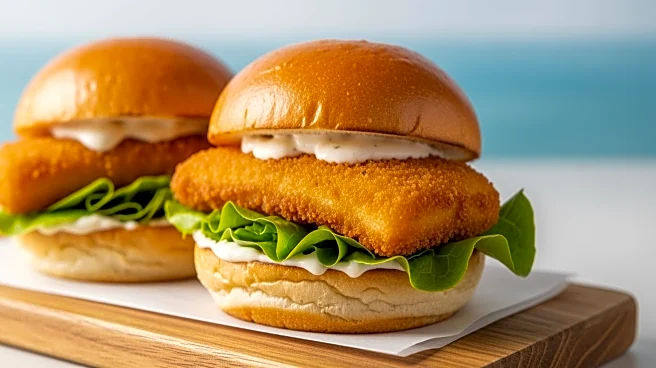
Fast-food chains are once again rolling out their seasonal fish sandwiches to coincide with Lent, a period when many Catholics abstain from eating meat on Fridays. This tradition has led to a competitive market for fish sandwiches among major fast-food
brands. McDonald's, which has been offering its Filet-O-Fish since the 1960s, continues to be a staple in this category. Other chains like Popeyes, Burger King, and Wendy's have also introduced their versions, with Popeyes adding a spicy fish sandwich to its menu following the success of its spicy chicken sandwich. The competition among these chains is fierce, as they aim to attract customers looking for meatless options during this period. Each chain offers a unique take on the fish sandwich, with variations in ingredients and preparation methods, such as the use of wild-caught Alaskan pollock and panko breading.
Why It's Important?
The seasonal introduction of fish sandwiches by fast-food chains highlights the significant impact of religious and cultural practices on consumer behavior and business strategies. For the fast-food industry, Lent represents a lucrative opportunity to boost sales by catering to the dietary restrictions of a large segment of the population. This period also allows chains to experiment with new menu items and flavors, potentially leading to permanent additions if they prove popular. The competition among chains to offer the best fish sandwich can drive innovation and improve product quality, benefiting consumers. Additionally, the focus on fish sandwiches during Lent underscores the importance of understanding and adapting to cultural and religious practices in the food industry.
What's Next?
As Lent progresses, fast-food chains will continue to promote their fish sandwiches, potentially introducing limited-time offers or discounts to attract more customers. The success of these seasonal items could influence future menu decisions, with chains possibly expanding their seafood offerings beyond the Lenten season. Consumer feedback and sales data collected during this period will likely inform future product development and marketing strategies. Additionally, chains may explore partnerships with sustainable seafood suppliers to appeal to environmentally conscious consumers, further enhancing their brand image and market appeal.