









What's Happening?
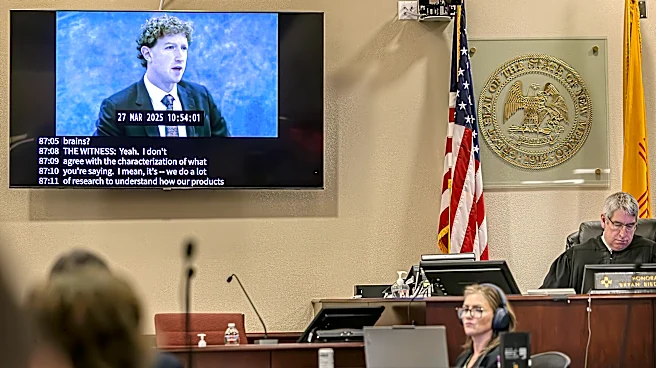
Meta is facing a significant legal challenge in New Mexico, where Attorney General Raúl Torrez has secured a $375 million judgment against the company in a child safety case. The case, which is now entering a new phase, involves a public nuisance trial
where the state seeks to impose changes on Meta's platforms, including Facebook, Instagram, and WhatsApp. Proposed changes include implementing age verification, limiting usage for minors, and enhancing detection of child sexual abuse material. The trial will determine whether these changes will be mandated, potentially setting a precedent for tech companies' responsibilities in safeguarding minors online.
Why It's Important?
The outcome of this trial could have far-reaching implications for the tech industry, particularly in how companies manage user safety and privacy. If the court mandates the proposed changes, it could lead to increased regulatory scrutiny and operational costs for Meta and similar companies. The case highlights ongoing debates about privacy, encryption, and the role of tech companies in protecting minors. A ruling in favor of New Mexico could encourage other states to pursue similar actions, potentially leading to a patchwork of regulations that tech companies must navigate.
What's Next?
The trial is expected to last three weeks, during which both sides will present evidence and call witnesses. If the court rules in favor of New Mexico, Meta may choose to implement the changes nationwide for consistency or risk withdrawing services from the state. The decision could influence ongoing and future litigation against tech companies, as well as legislative efforts to reform Section 230, which shields platforms from liability for user-generated content.
Beyond the Headlines
This case underscores the tension between user privacy and safety, particularly concerning minors. The proposed changes, such as limiting encryption, raise concerns about user privacy and the potential for increased data collection. The trial could set a legal precedent for how courts balance these competing interests, influencing future tech policy and regulation.