



What's Happening?
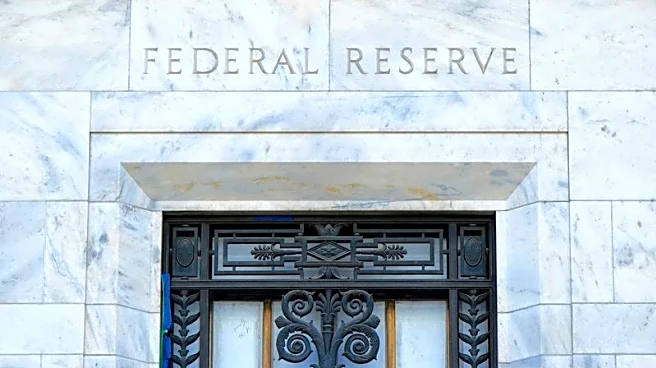
The Federal Reserve has opted to maintain its benchmark interest rate between 3.5% and 3.75% as it grapples with economic uncertainty exacerbated by the U.S.-Iran conflict. This decision comes amid signs of a weakening job market, with recent reports
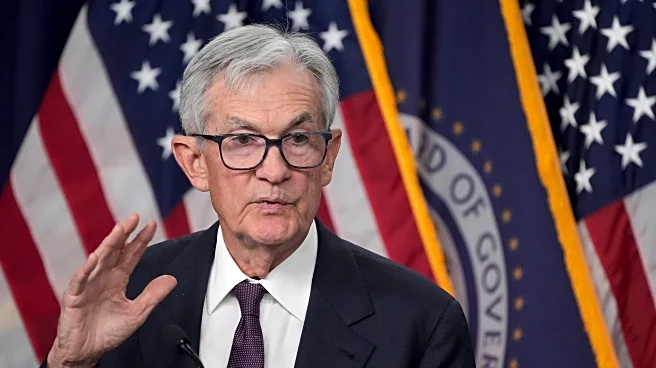
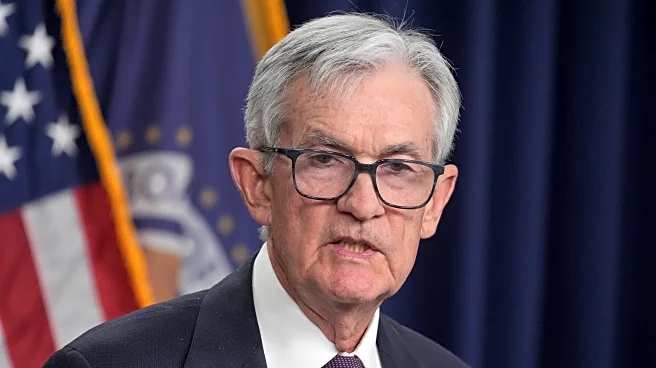
indicating a loss of 92,000 jobs in February and a stagnant employment growth over the past six months. The conflict has also led to a spike in global energy prices, particularly gasoline and diesel, which could further drive inflation. The Fed's decision reflects a cautious approach as it seeks to balance the need to support employment while managing inflationary pressures. The central bank's leadership is also in question, with Jerome Powell's term as chairman ending soon and his potential successor, Kevin Warsh, facing political opposition.
Why It's Important?
The Federal Reserve's decision to hold interest rates steady is crucial as it underscores the challenges of navigating economic policy amid geopolitical tensions and domestic economic issues. The conflict with Iran has introduced significant volatility in energy markets, which could lead to higher transportation costs and impact consumer spending. The Fed's cautious stance highlights the complexity of managing monetary policy in an uncertain environment, where external factors like geopolitical conflicts can have profound economic implications. The leadership transition at the Fed adds another layer of uncertainty, as the outcome could influence future policy directions. This decision will have wide-ranging effects on the U.S. economy, affecting businesses, consumers, and financial markets.
What's Next?
The Federal Reserve may consider future rate adjustments based on economic developments, particularly in the job market and inflation trends. The leadership transition at the Fed is also a critical factor, with Jerome Powell potentially remaining in his role if the confirmation of his successor is delayed. The ongoing political and legal challenges surrounding the Fed's leadership could impact its policy decisions and independence. Stakeholders will be closely watching these developments, as they could shape the economic landscape and influence monetary policy in the coming months.