
What's Happening?
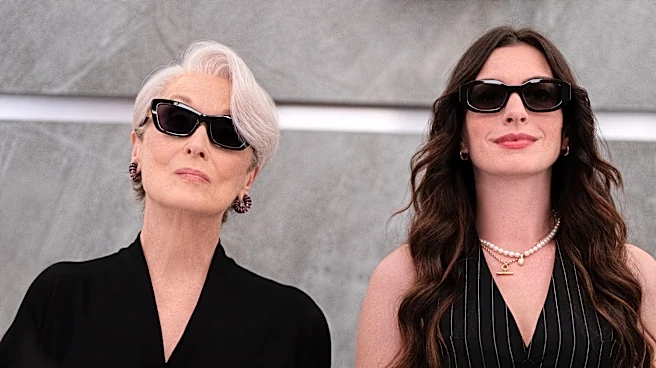
The sequel to the iconic film 'The Devil Wears Prada' explores significant changes in workplace culture since the original movie's release in 2006. In 'The Devil Wears Prada 2,' Meryl Streep reprises her
role as Miranda Priestly, a once-feared fashion magazine editor whose tyrannical leadership style is now seen as outdated. The film humorously depicts Miranda's struggle to adapt to a modern office environment where her intimidating demeanor no longer commands respect. Her former assistant, Andy Sachs, played by Anne Hathaway, returns to the fictional Runway magazine as a journalist and witnesses Miranda's challenges firsthand. The film portrays the shift in power dynamics, with new characters like Jay Ravitz, who represents a more casual and emotionally detached management style, taking center stage.
Why It's Important?
The film's narrative reflects broader societal changes in attitudes towards workplace leadership and harassment. It highlights how the once-accepted authoritarian management style is now viewed as out of touch, emphasizing the importance of empathy and inclusivity in modern workplaces. This shift is significant for industries across the U.S., as companies increasingly prioritize creating supportive and respectful environments. The portrayal of Miranda's decline in influence underscores the evolving expectations of leaders, who must now balance authority with sensitivity to employee well-being. The film also critiques the superficiality of performative casualness in leadership, suggesting that genuine respect and consideration are crucial for effective management.
What's Next?
As 'The Devil Wears Prada 2' resonates with audiences, it may spark discussions about leadership styles and workplace culture in various sectors. Companies might reevaluate their management practices to align with contemporary values, potentially leading to policy changes that promote healthier work environments. The film could also influence future portrayals of leadership in media, encouraging more nuanced and realistic depictions. Additionally, the storyline involving Andy's potential memoir about her experiences with Miranda may inspire real-world conversations about transparency and accountability in leadership.
Beyond the Headlines
The film's exploration of changing workplace dynamics also touches on the cultural shift towards valuing diversity and inclusion. Miranda's outdated views on size diversity highlight the ongoing challenges industries face in embracing true inclusivity. The narrative suggests that while some progress has been made, there is still work to be done in dismantling entrenched biases. The film serves as a reminder of the importance of continuous reflection and adaptation in leadership to meet the evolving needs of a diverse workforce.