
What's Happening?
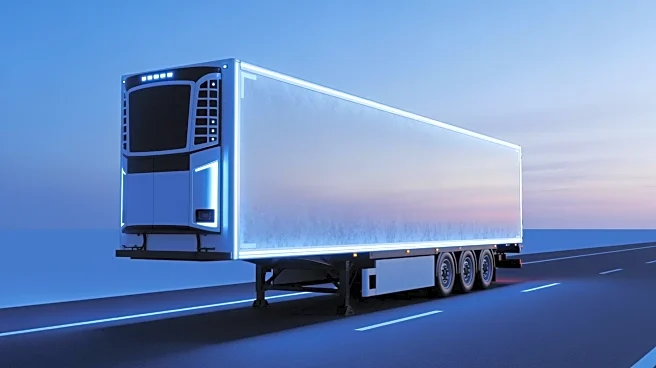
Gatik has initiated fully driverless commercial trucking operations in the United States, focusing on the delivery of refrigerated and frozen goods without human drivers or safety observers. The company,
which specializes in autonomous freight-only trucking for regional logistics, is now conducting daily deliveries for major retailers across Texas, Arkansas, and Arizona. Since mid-2025, Gatik has completed 60,000 driverless deliveries without incidents, operating its autonomous trucks on highways and surface streets. These trucks, which run nearly 24 hours a day, are crucial for maintaining the cold chain performance necessary for temperature-sensitive goods. Gatik's operations are supported by a collaboration with Isuzu Motors Limited, integrating an SAE Level 4 autonomous system into medium-duty trucks. The company has logged over 2,000 hours of driverless operation and more than 10,000 driverless miles on public roads.
Why It's Important?
The launch of Gatik's fully driverless trucking operations marks a significant milestone in the logistics industry, demonstrating the commercial viability of autonomous trucking. This development could lead to increased delivery frequency, reduced transportation costs, and improved efficiency in supply chains, particularly for temperature-sensitive goods. The success of Gatik's operations could encourage other companies to adopt similar technologies, potentially transforming the logistics landscape. The move also highlights the growing acceptance and integration of autonomous vehicles in commercial applications, which could have broader implications for labor markets and regulatory frameworks.
What's Next?
Gatik plans to continue expanding its driverless operations, with preparations underway for a mass-production, autonomous-ready vehicle program. The company is likely to face scrutiny from regulators and the public as it scales its operations, necessitating ongoing engagement with federal and state transportation authorities. As Gatik's model proves successful, other logistics companies may follow suit, leading to increased competition and innovation in the autonomous trucking sector. Additionally, the company may explore new markets and partnerships to further enhance its service offerings.