
What's Happening?
A Mississippi judge has granted Trinidad Chambliss, a quarterback for Ole Miss, an extra year of eligibility, allowing him to play in the 2026 season. This decision comes after Chambliss sought a medical
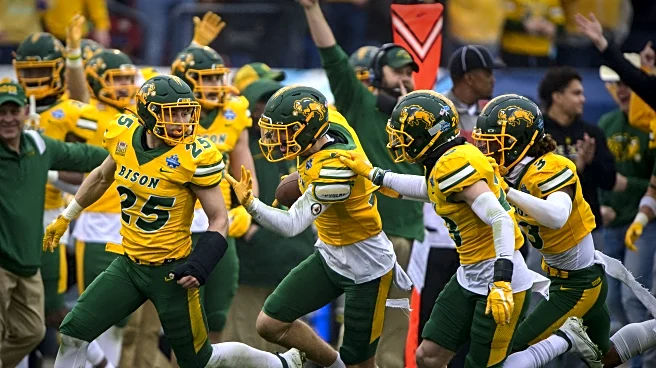
hardship waiver for the 2022 season, during which he was unable to play due to severe respiratory issues that required a tonsillectomy. Despite the NCAA denying his waiver request three times, including an appeal, Judge Robert Whitwell indicated his intention to grant Chambliss a preliminary injunction. This ruling prevents the NCAA from enforcing its eligibility decision while a broader lawsuit is ongoing. Chambliss, who transferred to Ole Miss in 2025 after leading Ferris State to a Division II national championship, has a significant financial stake in this decision, as his re-signing with Ole Miss is contingent on a name, image, and likeness package exceeding $5 million.
Why It's Important?
The judge's decision to grant Chambliss an extra year of eligibility is significant for several reasons. It highlights the ongoing debate over NCAA eligibility rules and the impact of medical hardships on athletes' careers. The ruling also underscores the increasing importance of name, image, and likeness (NIL) deals in college sports, as Chambliss's eligibility is tied to a substantial financial package. This case could set a precedent for other athletes seeking similar waivers, potentially influencing NCAA policies and the future of college athletics. For Ole Miss, having Chambliss eligible to play in 2026 is a major win, as it strengthens their team and enhances their competitive prospects.
What's Next?
As the broader lawsuit proceeds, the NCAA may face pressure to reconsider its stance on medical hardship waivers and eligibility rules. The outcome of this case could lead to changes in how the NCAA evaluates and grants such waivers, potentially affecting many athletes in similar situations. Additionally, the financial implications of NIL deals will likely continue to shape the landscape of college sports, prompting further discussions about the rights and compensation of student-athletes. Stakeholders, including universities, athletes, and legal experts, will be closely monitoring the developments in this case and its potential impact on the future of college athletics.