



What's Happening?
Mercedes-Benz Fashion Week Tbilisi has returned after a four-year hiatus, taking place from May 7 to 10, 2026. The event highlighted the intersection of tradition and modernity in the Georgian capital, featuring a blend of historical and contemporary
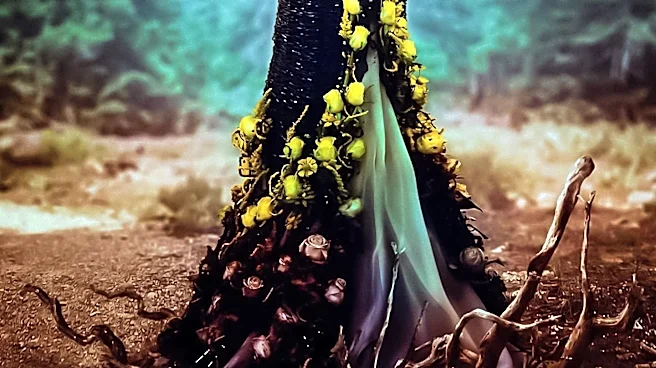
cultural influences. The fashion week served as a platform for local designers to present their work, emphasizing cultural reflection and new creative narratives from the Caucasus region. Notable participants included Galib Gassanoff, who showcased a collection inspired by Caucasian textile heritage, and Samoseli Pirveli, which focused on reinterpreting traditional garments for modern life. The event also featured installations, conferences, and discussions on technological innovation and sustainability.
Why It's Important?
The return of Mercedes-Benz Fashion Week Tbilisi underscores the city's role as a cultural hub that bridges Eastern and Western influences. It provides a vital platform for Georgian designers to gain international exposure and contribute to global fashion dialogues. The event's focus on cultural heritage and modern innovation highlights the importance of preserving traditional crafts while embracing contemporary design practices. This approach not only supports local artisans and designers but also enriches the global fashion industry by introducing diverse perspectives and narratives. The fashion week also emphasizes the role of fashion as a medium for political and social commentary, reflecting the complex realities of the region.
What's Next?
Following the successful return of Mercedes-Benz Fashion Week Tbilisi, there is potential for increased international collaboration and investment in the Georgian fashion industry. Designers who participated in the event may see opportunities to expand their reach into global markets, leveraging the exposure gained from the fashion week. Additionally, the emphasis on sustainability and technological innovation could inspire further developments in these areas, influencing future fashion trends and production methods. The event may also encourage other cities in the region to host similar platforms, fostering a broader cultural exchange and creative dialogue.
Beyond the Headlines
The fashion week in Tbilisi highlights the broader cultural and political dynamics at play in the region. By positioning fashion as a space for political expression, the event reflects the ongoing tensions between tradition and modernity, freedom and restriction. This duality is evident in the collections presented, which often incorporate themes of censorship, migration, and identity. The event also underscores the resilience and creativity of Georgian designers, who navigate these challenges to produce work that resonates both locally and globally. This narrative of cultural preservation and innovation may inspire other industries to explore similar approaches.