






What's Happening?
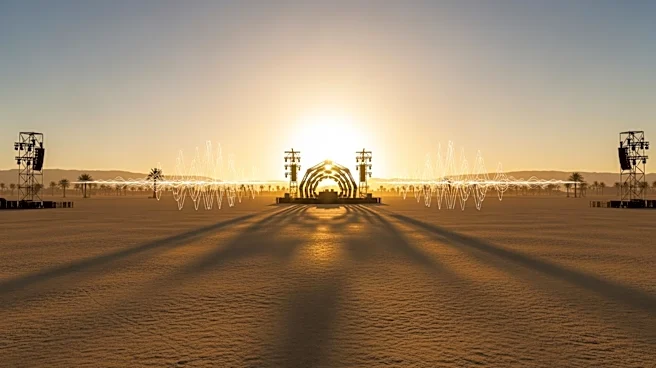
Coachella, which began in 1999 in Indio, California, has grown from a local music festival into one of the most significant global music events. Initially, the American festival scene was sparse, with few major events like Lollapalooza and Warped Tour.
Coachella distinguished itself with its unique desert setting and has since become a major platform for artists worldwide. The festival's growth is highlighted by its ability to attract top performers such as Beyoncé and Daft Punk. A significant aspect of Coachella's business model is the use of payment plans by 60% of general admission attendees, making it more accessible to younger audiences. The festival also faces challenges such as strict radius clauses that limit artists' performances in nearby areas, impacting emerging artists' touring schedules.
Why It's Important?
Coachella's evolution reflects broader trends in the music festival industry, where large-scale events have become cultural phenomena. The festival's success underscores the importance of strategic planning and marketing in the entertainment industry. By offering payment plans, Coachella makes itself accessible to a wider audience, particularly younger attendees who may not have the financial means to pay upfront. This approach not only increases attendance but also sets a precedent for other festivals. The festival's strict radius clauses highlight the competitive nature of the industry, affecting artists' touring decisions and potentially limiting their exposure. Coachella's model demonstrates how festivals can balance exclusivity with accessibility, influencing how future events are organized.
What's Next?
As Coachella continues to grow, it may face increased competition from other festivals and entertainment options. The festival's organizers will need to innovate to maintain its status as a leading cultural event. This could involve expanding its lineup diversity, enhancing attendee experiences, or leveraging technology to engage audiences. The impact of radius clauses on artists' touring schedules may prompt discussions about fair practices in the industry. Additionally, the economic model of using payment plans could be adopted by other festivals, potentially reshaping how tickets are sold and making large events more financially accessible.