



What's Happening?
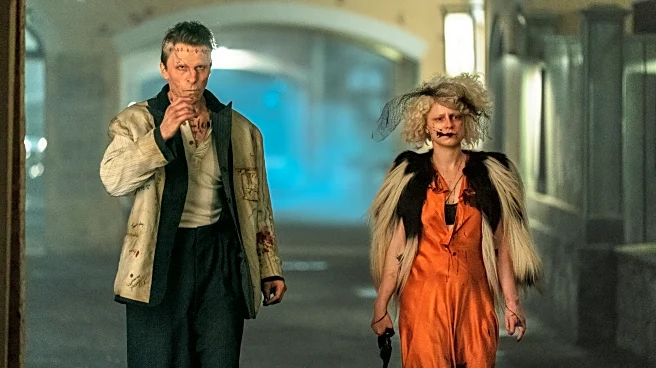
British novelist Adam Mars-Jones's 2020 novel 'Box Hill', which delves into a BDSM relationship between two men in the 1970s, has been adapted into a film titled 'Pillion'. Directed by Harry Lighton, the film stars Harry Melling and Alexander Skarsgård
as the main characters, Colin and Ray. The adaptation has made significant changes from the book, including updating the setting to the present day and altering character dynamics. Mars-Jones, known for his work on the lives of gay men, expressed surprise at the film's enthusiastic reception. The film's narrative explores themes of dominance and submission, with a focus on the complexities of relationships and identity.
Why It's Important?
The adaptation of 'Box Hill' into 'Pillion' highlights the evolving landscape of LGBTQ+ representation in media. By bringing a story centered on a BDSM relationship to the big screen, the film challenges traditional narratives and offers a nuanced portrayal of queer relationships. This move is significant in promoting diversity and inclusivity in the film industry, potentially influencing public perceptions and encouraging more stories that explore complex and diverse experiences. The film's reception could impact future projects, encouraging filmmakers to tackle unconventional and provocative themes.
What's Next?
As 'Pillion' gains attention, it may spark discussions about the portrayal of LGBTQ+ relationships in media and the responsibilities of filmmakers in representing such narratives. The film's success could lead to more adaptations of similar works, further diversifying the types of stories told in mainstream cinema. Additionally, the film's reception might influence how future projects approach the adaptation of literature, particularly those with complex themes and characters.
Beyond the Headlines
The adaptation of 'Box Hill' into 'Pillion' raises questions about the ethics of storytelling and the balance between staying true to source material and making creative changes for cinematic purposes. The film's exploration of power dynamics within relationships also invites broader discussions about consent, agency, and the portrayal of marginalized communities in media. These conversations could contribute to a deeper understanding of the cultural and social implications of such narratives.