



What's Happening?
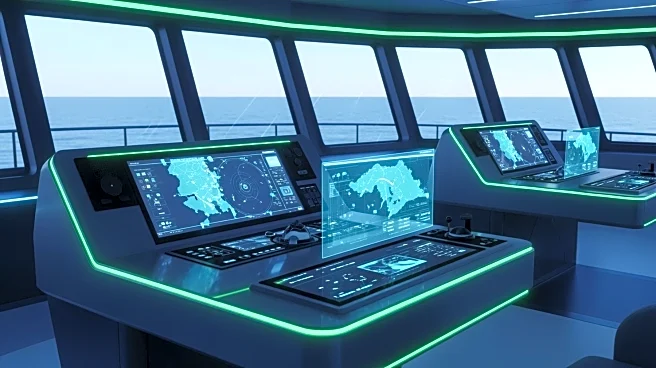
HMM, a major shipping company, has entered into a significant agreement with HD Hyundai's subsidiary, Avikus, to implement autonomous navigation technology on 40 of its vessels. This collaboration marks a pivotal moment in the maritime industry as it transitions from technical validation to large-scale commercialization of autonomous navigation systems. Avikus, which has become the first company to secure agreements for over 100 units of this technology for large-scale commercial vessels, will initially install the systems through retrofits, with plans to incorporate them into new builds. The technology, which is based on Level 2 automation, allows for full control of a vessel's navigation using artificial intelligence, optimizing routes and
speeds without crew intervention to enhance fuel efficiency and operational effectiveness.
Why It's Important?
The adoption of autonomous navigation technology by HMM and Avikus represents a significant advancement in maritime operations, potentially transforming the industry by addressing critical challenges such as crew shortages and fatigue. By enhancing operational efficiency and reducing human error, this technology could lead to safer and more cost-effective shipping practices. The move also positions HMM and Avikus as leaders in the commercialization of AI-driven maritime solutions, setting a new standard for global fleet competitiveness. As the industry continues to face pressure to improve safety and efficiency, the successful implementation of this technology could drive broader adoption across the sector.
What's Next?
The maritime industry is expected to closely monitor the implementation of Avikus's autonomous navigation systems on HMM's vessels. As these systems undergo trials and move towards acceptance by class societies, there will be a push for regulatory frameworks from organizations like the International Maritime Organization (IMO) to support the integration of autonomous navigation across all shipping sectors. The success of this initiative could encourage other shipping companies to adopt similar technologies, potentially leading to widespread changes in maritime operations and regulations.