









What's Happening?
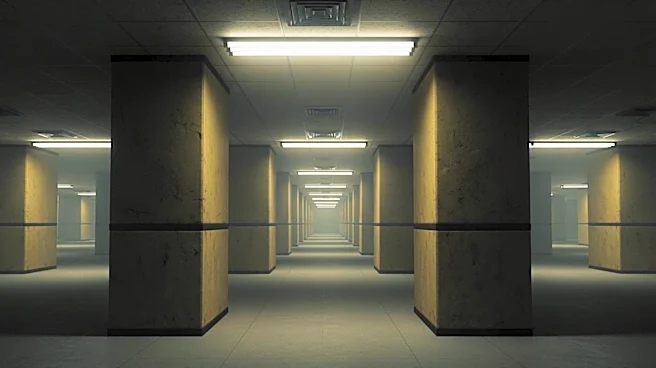
Kane Parsons, a first-time feature filmmaker, has directed 'Backrooms,' a horror film adapted from his YouTube series. The film immerses viewers in a mysterious underground world, featuring British actor Chiwetel Ejiofor as Clark, a frustrated architect
who discovers a passage to a labyrinth of yellow rooms. The film's atmosphere is enhanced by a haunting musical score and sudden, frightening figures. Despite its eerie setting, the film struggles to provide context, leaving much of its meaning unexplained. The narrative follows Clark's descent into madness and the fates of his assistant and others, tied to an absurdist reality.
Why It's Important?
'Backrooms' represents a new wave of horror that focuses on psychological and atmospheric elements rather than traditional jump scares. This approach can influence future horror films, encouraging filmmakers to explore deeper themes and innovative storytelling techniques. The film's success could pave the way for more independent filmmakers like Parsons to gain recognition in the industry. Additionally, the film's unique setting and narrative structure may attract audiences seeking fresh experiences in the horror genre, potentially expanding the genre's appeal.
What's Next?
Given the film's origins as a YouTube series, there is potential for a sequel or further exploration of the 'Backrooms' universe. The film's open-ended nature and unexplained elements provide ample material for future installments. If successful, Parsons could continue to develop his style and contribute to the evolution of horror cinema. The film's reception may also influence other filmmakers to experiment with similar themes and settings, potentially leading to a broader shift in the genre.
Beyond the Headlines
The film's exploration of the unknown and its psychological impact on characters highlights the human fear of the unexplained. This theme resonates with audiences on a deeper level, as it taps into universal anxieties about reality and perception. 'Backrooms' challenges viewers to confront their fears and question their understanding of the world, offering a thought-provoking experience beyond typical horror tropes. This approach may inspire discussions about the nature of fear and its role in storytelling.