



What's Happening?
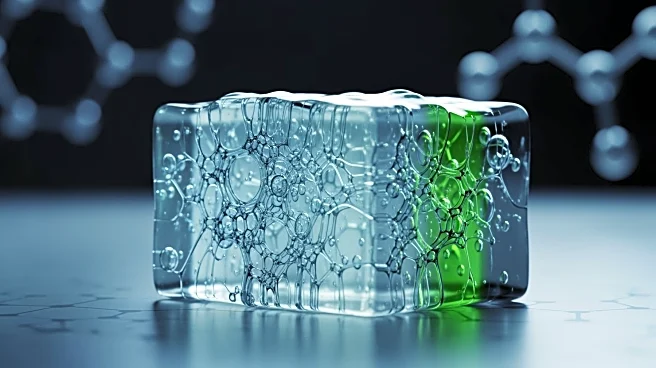
Recent research has focused on the synthesis and application of polymers containing monophosphate and bisphosphonate groups, which are crosslinked with divalent cations like calcium and zinc. These polymers have been developed to create hydrogels with unique properties such as self-healing and stress-thinning, making them suitable for advanced material applications. The study involved the polymerization of acrylamide monomers in water, using ammonium persulfate as a radical initiator, to form polymers that can be crosslinked with metal ions. The resulting hydrogels exhibit significant mechanical strength and can be fine-tuned by adjusting polymer and cation concentrations. These materials have potential uses in 3D printing and as injectable
biomaterials due to their ability to transition between gel and sol states under stress.
Why It's Important?
The development of these advanced hydrogels represents a significant step forward in material science, particularly in the field of smart materials. The ability to create self-healing and stress-thinning hydrogels opens up new possibilities for applications in biomedical engineering, such as drug delivery systems and tissue engineering. These materials can potentially reduce the need for invasive procedures by allowing for minimally invasive implantation. Additionally, their use in 3D printing could revolutionize the manufacturing of complex structures, offering more sustainable and efficient production methods. The research highlights the importance of innovative polymer chemistry in addressing current challenges in material design and application.
What's Next?
Future research will likely focus on optimizing the synthesis and application of these hydrogels to enhance their properties and expand their potential uses. This could involve exploring different monomer compositions and crosslinking agents to further improve the mechanical and functional properties of the hydrogels. Additionally, there may be efforts to scale up production for commercial applications, particularly in the medical and manufacturing sectors. Collaboration between material scientists and industry stakeholders will be crucial in translating these laboratory findings into practical, real-world solutions.
Beyond the Headlines
The ethical and environmental implications of these advanced materials should also be considered. The use of sustainable and non-toxic materials in the synthesis of these hydrogels could mitigate environmental impact and align with global sustainability goals. Furthermore, the development of self-healing materials could lead to longer-lasting products, reducing waste and resource consumption. As these technologies advance, it will be important to address potential regulatory and safety concerns, particularly in biomedical applications.