




What's Happening?
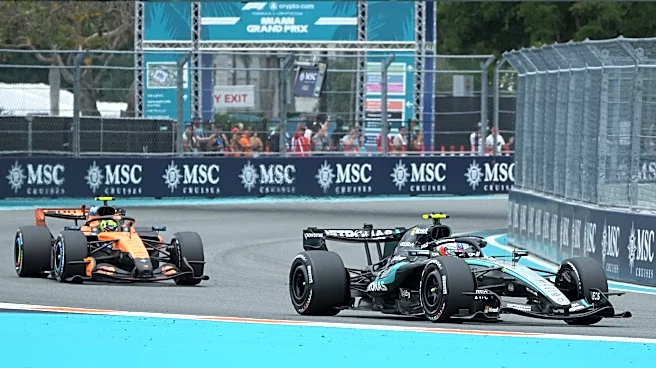
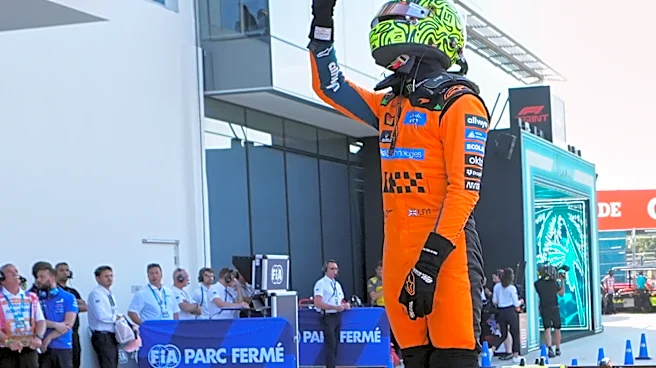
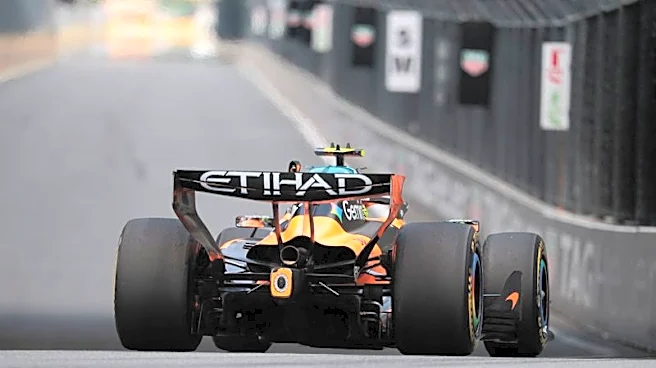
Formula One is experiencing mounting pressure to reconsider its engine regulations, particularly the role of batteries in the current hybrid systems. World champion Lando Norris, following the Miami Grand Prix, has voiced dissatisfaction with the current engine formula,
which heavily relies on a balance between internal combustion and electrical energy. Norris argues that the reliance on batteries penalizes drivers who push their cars to the limit, suggesting that removing the battery could resolve these issues. His views are supported by teammate Oscar Piastri, who believes that fundamental changes to engine design are necessary. FIA President Mohammed Ben Sulayem has indicated a potential shift back to V8 engines with minor electrification by 2030 or 2031, but immediate changes are under discussion, with Mercedes expressing openness to new regulations.
Why It's Important?
The debate over engine regulations in Formula One highlights a broader tension between technological advancement and traditional racing values. The current hybrid engines, while innovative, have faced criticism for diminishing the sport's excitement and penalizing aggressive driving styles. This controversy could influence the future direction of Formula One, potentially affecting its appeal to fans and its alignment with global sustainability goals. Teams and manufacturers stand to gain or lose based on the outcome of these discussions, as changes could impact competitive dynamics and technological investments.
What's Next?
The immediate focus is on whether a consensus can be reached for short-term changes to the engine regulations, potentially in time for the next season. Discussions are expected to intensify leading up to the Canadian Grand Prix, where teams and manufacturers will need to agree on any proposed adjustments. The outcome of these talks could set a precedent for how Formula One balances innovation with tradition in the coming years.