


What's Happening?
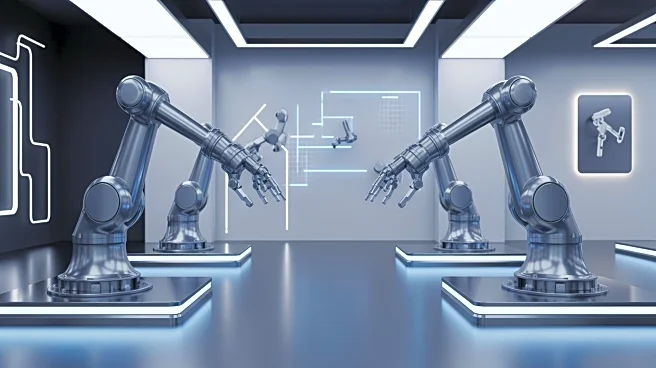
The CES 2026 showroom floor is showcasing a wide array of robotic innovations, with notable contributions from companies like Sharpa and Unitree. Among the highlights is a Ping-Pong playing robot developed by Sharpa, which is designed to demonstrate the dexterity of their primary product, a robotic hand. This robot, although currently losing to human competitors, showcases impressive capabilities in playing Ping-Pong. Sharpa's robotic hand is primarily sold to universities for research purposes, according to Qiyang Zhang, the business development manager for Sharpa. Additionally, Unitree is presenting a series of quadruped robots known for their dancing abilities, maintaining the tradition of dancing robots at CES. These demonstrations are part
of a broader trend at CES 2026, where robots are a significant focus, featuring various functionalities from entertainment to practical applications.
Why It's Important?
The prominence of robotics at CES 2026 underscores the growing importance of automation and robotics in various sectors, including education, entertainment, and research. Companies like Sharpa and Unitree are at the forefront of this technological advancement, providing tools that enhance research capabilities and offer new forms of entertainment. The development of robotic hands and quadruped robots highlights the potential for these technologies to be integrated into everyday life, potentially transforming industries by improving efficiency and creating new opportunities for innovation. The focus on robotics at CES also reflects broader industry trends towards automation and the increasing role of artificial intelligence in developing sophisticated robotic systems.
What's Next?
As robotics technology continues to advance, companies like Sharpa and Unitree are likely to expand their product offerings and explore new markets. The demonstration of robotic capabilities at CES 2026 may lead to increased interest from educational institutions and industries looking to integrate robotics into their operations. Future developments may include enhancements in robotic dexterity and functionality, making these technologies more accessible and applicable to a wider range of uses. Additionally, the feedback and exposure gained from CES could drive further innovation and collaboration within the robotics industry.
Beyond the Headlines
The advancements in robotics showcased at CES 2026 may have broader implications for the workforce and society. As robots become more capable and versatile, there could be shifts in job markets, with increased demand for skills related to robotics and automation. This technological evolution may also raise ethical and regulatory questions regarding the deployment of robots in various settings, including privacy concerns and the impact on human labor. The continued development of robotics technology will likely necessitate discussions around these issues, as society adapts to the integration of robots into daily life.