



What's Happening?
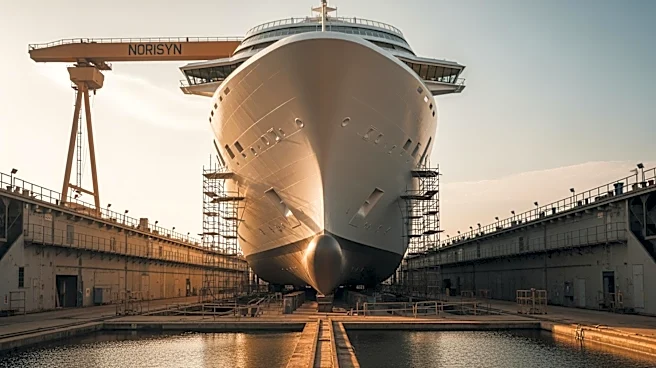
Freedom Cruise Line has unveiled plans for the Freedom Ship, a massive 'floating city' designed to accommodate 80,000 people. Unlike traditional cruise ships, this vessel is intended for long-term residence and will continuously circumnavigate the globe.
The ship will feature elements of a modern city, including schools, shops, banks, and entertainment venues. It will also include a two-story food hall, a sports stadium, a water park, and green spaces. The project, estimated to cost $16.16 billion, aims to provide homes for 50,000 residents and accommodate 10,000 tourists, supported by a crew of 20,000. The ship will be powered by nuclear energy and will remain in international waters, with transportation to land facilitated by ferries and helicopters.
Why It's Important?
The Freedom Ship represents a significant innovation in maritime living, potentially transforming how people perceive residential and travel experiences at sea. By offering a self-contained urban environment, it challenges traditional notions of cruise travel and could set a precedent for future developments in floating infrastructure. The project could impact various industries, including tourism, real estate, and maritime engineering, by introducing a new model of living and travel. If successful, it could attract significant investment and interest from those seeking alternative lifestyles or unique travel experiences. However, the project's feasibility depends on securing substantial funding and overcoming engineering challenges.
What's Next?
The next steps for the Freedom Ship involve securing the necessary capitalization to begin construction. Freedom Cruise Line CEO Roger Gooch has expressed confidence in the project's potential but acknowledges that funding is crucial. If financing is obtained, construction could take up to four years, with the possibility of residents moving aboard during the building phase. The project's success will likely depend on continued interest and investment from stakeholders in the maritime and real estate sectors. Additionally, regulatory considerations and environmental impacts will need to be addressed as the project progresses.