





What's Happening?
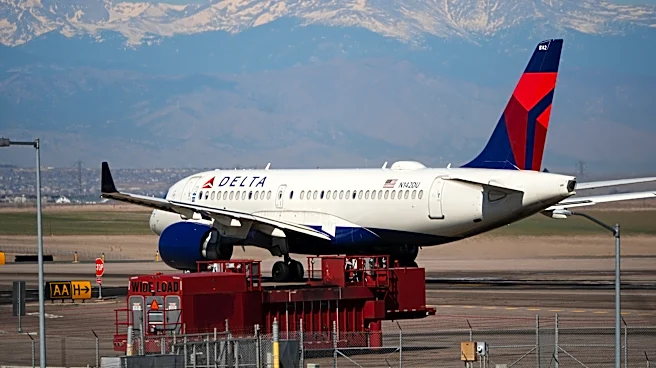
Delta Air Lines has reported a 9.4% increase in first-quarter revenue, reaching $14.2 billion, with a significant contribution from premium, corporate, and loyalty spending. CEO Ed Bastian noted during a Wednesday earnings call that affluent passengers
are less affected by geopolitical conflicts and continue to travel as usual. This trend is part of a broader K-shaped economy, where high-income consumers maintain spending levels despite global uncertainties, while lower-income consumers face financial constraints. Delta's premium revenue grew by 14% compared to the previous year, underscoring the resilience of its affluent customer base.
Why It's Important?
The resilience of affluent consumers in the face of geopolitical tensions highlights the ongoing bifurcation in the U.S. economy, known as the K-shaped economy. This phenomenon has significant implications for businesses, as companies catering to high-income consumers may continue to thrive, while those targeting lower-income groups may struggle. Delta's ability to capitalize on premium spending suggests a strategic advantage in the aviation industry, where geopolitical conflicts and rising fuel prices pose challenges. The company's performance may influence other airlines and sectors to focus on premium offerings to mitigate economic volatility.
What's Next?
Delta's focus on premium passengers may lead to further investments in enhancing the travel experience for affluent customers. As geopolitical tensions persist, the airline might explore strategies to maintain its revenue growth by expanding loyalty programs and corporate partnerships. Other airlines may follow suit, prioritizing premium services to attract high-income travelers. Additionally, the broader economic landscape may prompt businesses to reassess their target demographics and adapt to the K-shaped economy by offering differentiated products and services.