
What's Happening?
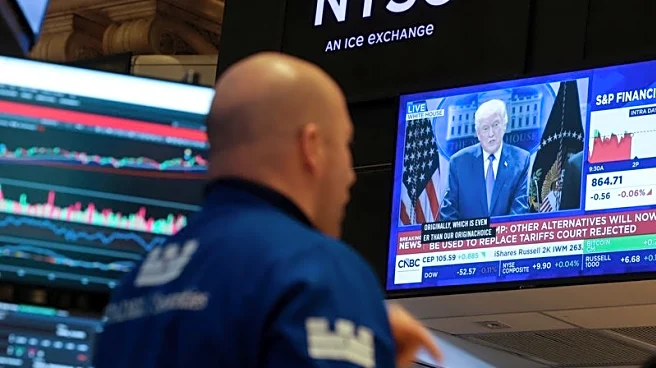
The Supreme Court of the United States has ruled that the executive branch does not have the authority to impose broad-based tariffs under the International Emergency Economic Powers Act (IEEPA). This 6-3 decision dismantles a high-tariff regime that had
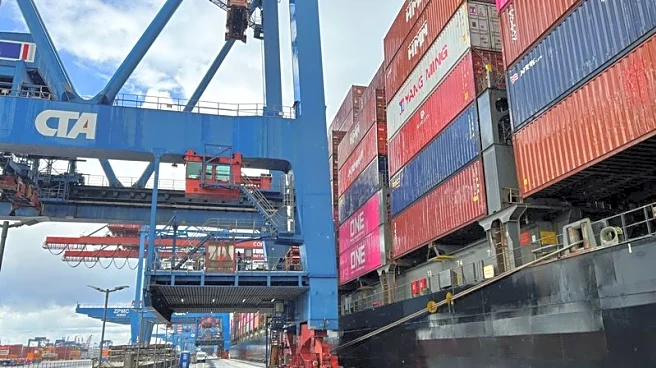
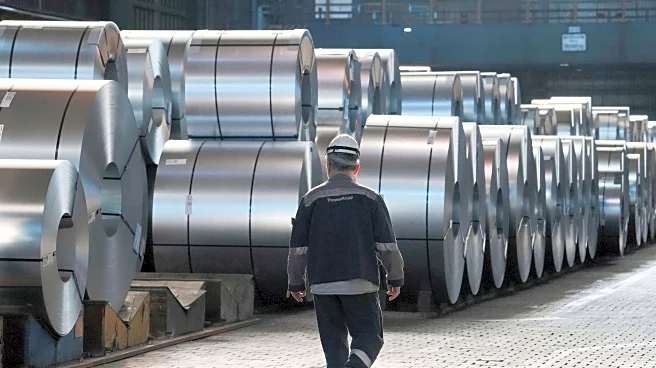
been in place since early 2025, affecting major exporting nations like China, Brazil, and India. The ruling opens the door for an estimated $200 billion in rebates for U.S.-based importers. The tariffs, which had reached as high as 50% for some goods, have been reduced to a temporary 15% surcharge. The decision was based on the 'Major Questions Doctrine,' which requires clear congressional authorization for policies of significant economic and political impact.
Why It's Important?
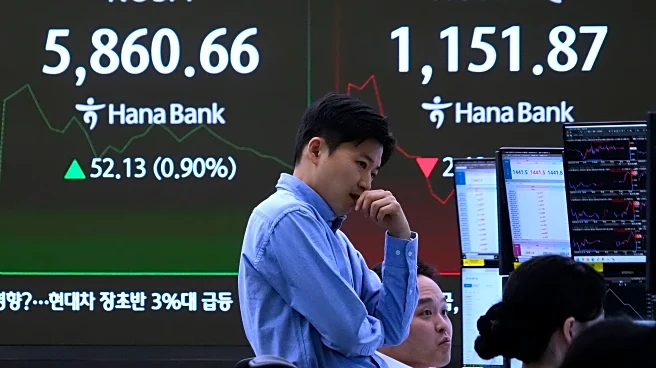
This ruling is significant as it restores the constitutional balance of trade power, emphasizing that the power to tax and levy duties resides with Congress. The decision provides a massive liquidity event for American businesses that have been struggling with high import costs. It also marks a shift away from 'emergency-style' trade wars, potentially leading to more predictable trade policies. However, domestic producers who benefited from the high tariffs may face increased competition. The ruling also impacts the bond market, as the U.S. Treasury will need to fund the $200 billion refund, affecting federal deficit concerns.
What's Next?
The administration has issued an emergency Executive Order to cease IEEPA-based collections and has invoked Section 122 of the Trade Act of 1974 to impose a temporary 15% global import surcharge. The U.S. Court of International Trade is expected to direct U.S. Customs and Border Protection to process refunds. Companies like FedEx and Amazon will need to verify import records for refunds. The 150-day clock on the Section 122 surcharge is ticking, and unless Congress acts, these duties could expire by July 2026. This creates an opportunity for retailers to restock inventory at lower tariff rates.
Beyond the Headlines
The ruling may slow the trend of moving supply chains out of China, as the reduced duty rate diminishes the economic urgency to relocate manufacturing. The decision also affects international relations, with countries like the UK and Australia facing new uniform surcharges, leading to diplomatic tensions. The ruling could lead to a more stable trade environment, but it also highlights the ongoing constitutional debate over executive power in trade policy.