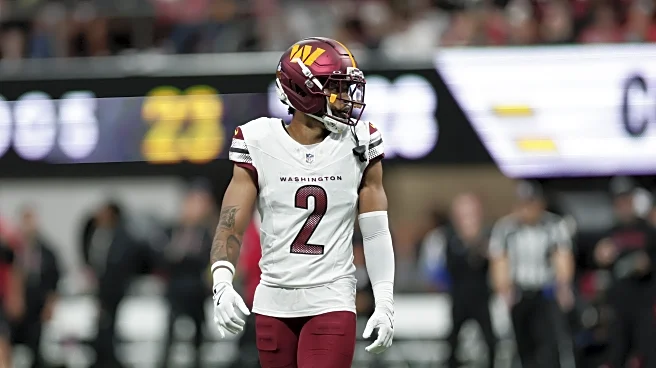




What's Happening?
The Washington Commanders have released center Tyler Biadasz, a decision clarified by ESPN's John Keim as being driven by cash considerations rather than salary cap issues. Despite Biadasz's underwhelming performance in the 2025 season, which did not
justify his salary cap hit of nearly $11 million, the Commanders' decision was primarily influenced by the $8.3 million in cash he was due. The team, which already has the fifth most salary cap space in the NFL, will save approximately $2.8 million in cap space with this move. The release allows the Commanders to reallocate funds towards free agency, aligning with their strategy to be more aggressive in the market. The decision was made on February 26, and as of now, Commanders' starting quarterback Jayden Daniels has not commented on the release.
Why It's Important?
This move highlights the financial strategies NFL teams must employ to balance performance and budget constraints. By releasing Biadasz, the Commanders can redirect significant cash resources to strengthen their roster through free agency. This decision underscores the importance of cash flow management in professional sports, where teams must often make tough choices between retaining players and pursuing new talent. The release also signals potential changes in the Commanders' lineup, as they seek to improve their competitiveness in the league. The financial flexibility gained could be pivotal in acquiring key players who can enhance the team's performance in the upcoming season.
What's Next?
The Commanders are expected to use the freed-up cash to pursue new talent aggressively in the free agency market. This move could lead to significant roster changes as the team aims to bolster its lineup. Additionally, the potential release of cornerback Marshon Lattimore, which could create an additional $18.5 million in cap space, suggests further financial maneuvering. The Commanders' management will likely continue to evaluate their roster and make strategic decisions to optimize both performance and financial health. Stakeholders, including fans and analysts, will be watching closely to see how these financial decisions translate into on-field success.