





What's Happening?
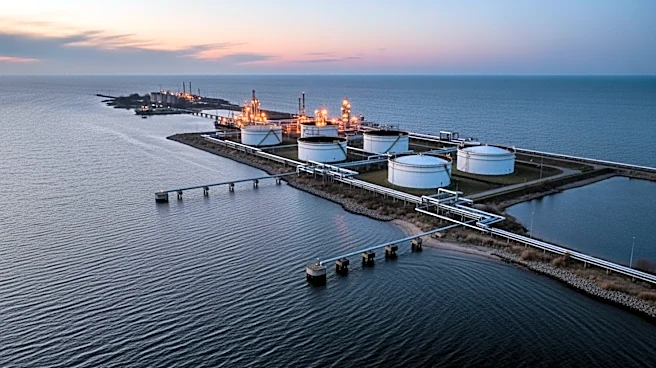
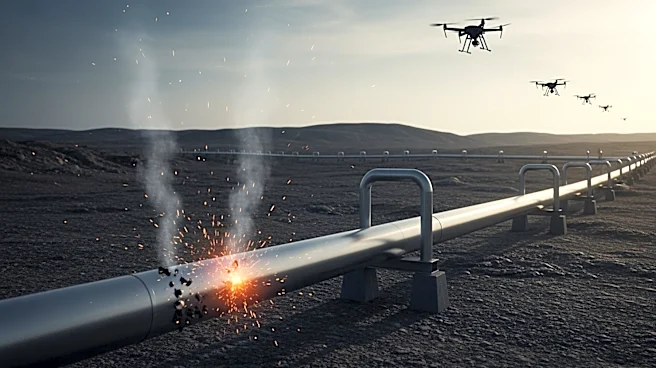
Recent drone attacks have significantly impacted Russia's oil export capacity, potentially forcing a reduction in production to prevent storage overloads. The attacks have targeted port infrastructure, pipelines, and refineries, reducing export capacity by
about 1 million barrels per day, approximately 20% of current capacity. The main port of Ust-Luga on the Baltic Sea has halted exports due to these strikes, leading to congestion in the oil-refining system. This situation is causing some oil fields to reduce production to avoid exceeding logistics capacity. The export issues also affect Kazakhstan, which ships oil through Ust-Luga.
Why It's Important?
The reduction in Russia's oil export capacity poses significant risks to global energy markets and Russia's economy, where oil and natural gas are major revenue sources. The disruption could lead to increased global oil prices, affecting economies worldwide. For Russia, the inability to export oil efficiently could strain its budget and economic stability. The situation also highlights vulnerabilities in Russia's energy infrastructure, which could have long-term implications for its role in global energy markets.
What's Next?
With storage facilities nearing capacity, Russia may be compelled to cut oil production further if export issues persist. The seasonal maintenance of refineries, typically a time for increased exports, could exacerbate stockpiling issues. The ongoing geopolitical tensions and infrastructure vulnerabilities suggest that Russia's energy sector may face continued challenges, potentially impacting global oil supply and prices.