








What's Happening?
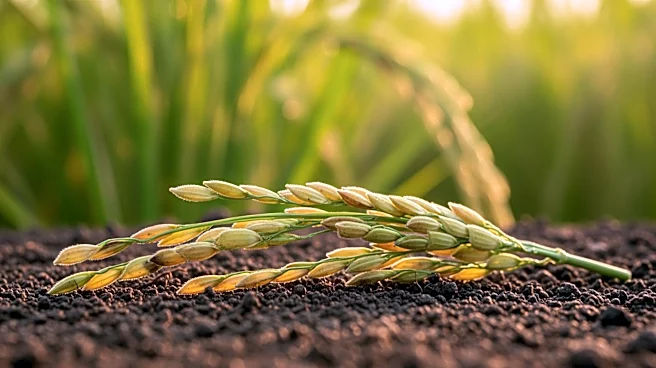
Rice growers in the U.S. are facing a critical decision on whether to attempt a second planting, switch to soybeans, or accept prevented planting payments due to adverse weather conditions. The Risk Management Agency (RMA) of the USDA provides insurance
policies with prevented planting provisions to protect farmers from losses when they cannot plant their expected crops. The final planting date for rice is May 25, with a late planting period ending on June 9. Extension economist Hunter Biram from the University of Arkansas highlights the tradeoff between the prevented planting payment for rice and the potential profitability of late-planted soybeans. Farmers must consider their Actual Production History (APH) to make informed decisions.
Why It's Important?
This situation underscores the financial and strategic challenges faced by farmers due to unpredictable weather patterns. The decision between replanting and accepting insurance payments can significantly impact a farmer's financial stability and future crop yields. The broader implications include the need for adaptive agricultural practices and policies that support farmers in managing climate-related risks. The potential shift from rice to soybeans also reflects broader trends in crop diversification as a risk management strategy. This decision-making process is crucial for maintaining the economic viability of farms and ensuring food security.