
What's Happening?
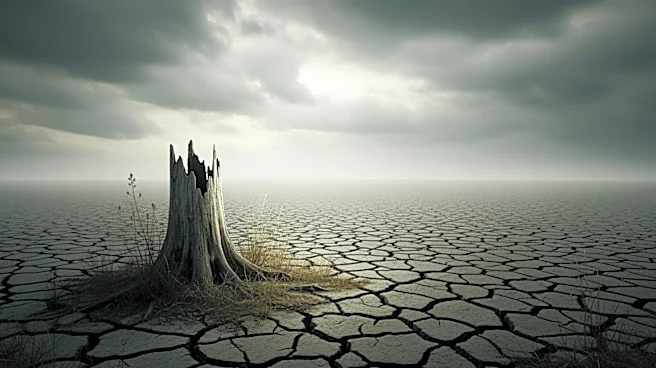
Lily Brooks-Dalton's novel 'Ruins' is set in a dystopian future shaped by environmental collapse, exploring themes of isolation and control within a tightly regulated society. The story follows Ember Agni,
a once-promising archaeologist turned academic, living in a society called the Commonwealth, which emerged after a global climate catastrophe known as the Crisis. The novel is structured in three parts, focusing on Ember's obsession with an artifact from Pre-Crisis times, her trial against university peers and government representatives, and her expedition to uncover historical truths. Despite its compelling premise, the novel struggles with a disjointed narrative and an unlikable protagonist, making it difficult for readers to engage fully with the story.
Why It's Important?
The novel 'Ruins' highlights the potential consequences of environmental neglect and the societal shifts that could follow a global climate catastrophe. By setting the story in a future where traditional technologies and conveniences are scarce, Brooks-Dalton prompts readers to consider the fragility of modern society and the importance of sustainable practices. The book also explores the impact of individual obsessions and the ethical dilemmas faced when personal ambitions conflict with societal norms. These themes resonate with current global discussions on climate change and the need for collective action to prevent environmental disasters.
What's Next?
As 'Ruins' continues to reach readers, it may spark discussions on the role of fiction in addressing climate change and the power of storytelling to influence public perception and policy. The novel's exploration of government control and propaganda could also lead to conversations about transparency and accountability in governance, especially in the context of environmental policies. Readers and critics may further analyze the character development and narrative structure, potentially influencing future works in the genre of climate fiction.
Beyond the Headlines
Beyond its immediate narrative, 'Ruins' raises questions about the ethical responsibilities of scientists and academics in preserving historical truths and the potential consequences of prioritizing personal ambitions over collective well-being. The novel's depiction of a society grappling with the aftermath of a climate crisis serves as a cautionary tale, urging readers to reflect on current environmental policies and the long-term impact of human actions on the planet. The book's themes of isolation and control also resonate with contemporary issues of individualism and community in an increasingly interconnected world.