








What's Happening?
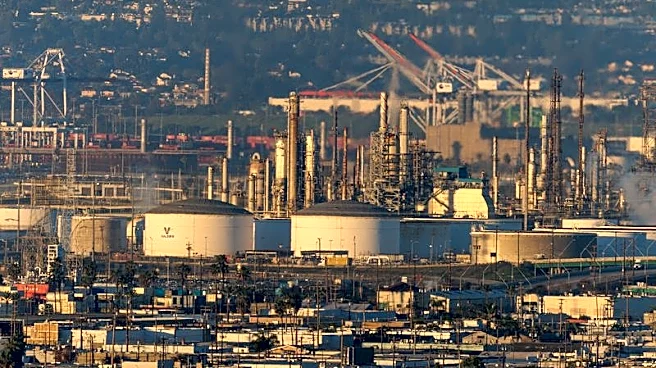
Nigeria's largest refinery, operated by Aliko Dangote, is exporting jet fuel to Europe, capitalizing on strong profit margins and high demand. The refinery, which has reached full operational capacity, is now able to meet domestic fuel needs and export surplus
to international markets. This development comes as global oil prices rise, with aviation fuel costs increasing due to supply shortages in various countries. The refinery's exports have reached record levels, with European buyers paying premiums due to peak summer travel demand. The facility's ability to produce 24 million liters of jet fuel daily allows it to supply both international markets and Nigerian airlines, although domestic airlines face challenges from rising fuel prices.
Why It's Important?
The export of jet fuel from Nigeria's largest refinery highlights the country's growing role in the global energy market. By reducing reliance on imported refined products, Nigeria strengthens its economic position and increases its influence in the oil industry. The refinery's success in exporting to Europe demonstrates the potential for African countries to become key players in global energy supply chains. However, the rising fuel prices pose challenges for domestic airlines, which may face operational disruptions. This situation underscores the tension between maximizing export profits and ensuring affordable domestic supply, a balance crucial for Nigeria's economic stability.
What's Next?
As the refinery continues to expand its global footprint, it is likely to increase its exports to other regions, potentially enhancing Nigeria's economic influence. However, domestic airlines may push for government intervention to address rising fuel costs, which could lead to policy changes affecting the energy sector. Additionally, the refinery's reliance on crude imports from the United States and other countries may prompt discussions on further developing Nigeria's own crude production capabilities to support its refining operations.
Beyond the Headlines
The refinery's operations reflect broader trends in the global energy market, where supply chain disruptions and geopolitical tensions influence fuel availability and prices. The situation also raises questions about energy equity, as countries with refining capabilities can profit from exports while others face shortages. This dynamic may lead to increased calls for investment in refining infrastructure in developing countries to reduce dependency on imports and enhance energy security.