

What's Happening?
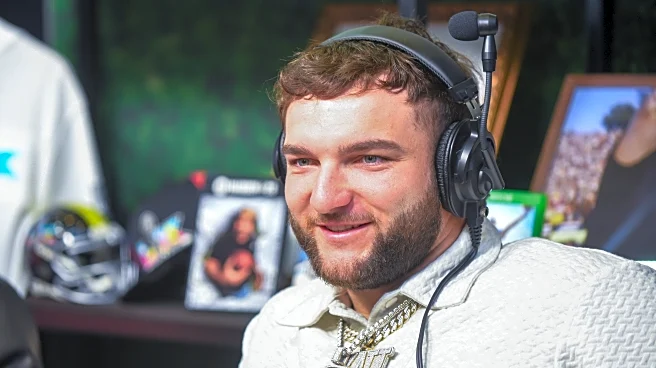
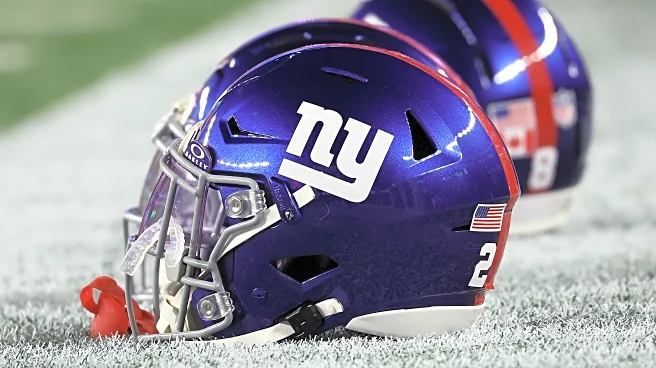
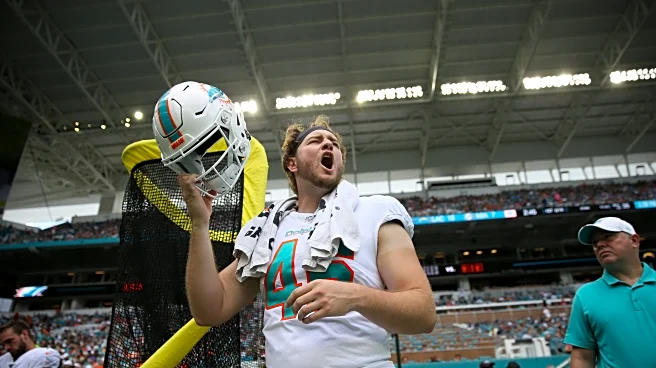
Cam Skattebo, a running back for the New York Giants, recently made controversial remarks regarding Chronic Traumatic Encephalopathy (CTE) during an appearance on the 'Bring the Juice with Frank Dalena' podcast. Skattebo stated that he does not believe
CTE is real, calling it 'an excuse.' His comments have sparked discussions about the seriousness of CTE, a brain condition associated with repeated head injuries, often found in athletes, particularly football players. The podcast host, Frank Dalena, further fueled the controversy by suggesting that asthma is also an excuse, to which Skattebo responded by labeling asthma as 'fake' and advising those affected to 'just breathe air.' These statements have drawn criticism and raised questions about the awareness and understanding of these medical conditions among athletes.
Why It's Important?
The remarks by Cam Skattebo are significant as they touch on the ongoing debate about the recognition and understanding of CTE in professional sports, particularly in the NFL. CTE has been a major concern due to its severe impact on the health of athletes, leading to symptoms such as memory loss, confusion, and behavioral changes. Skattebo's dismissal of CTE as an 'excuse' undermines efforts to address and mitigate the risks associated with head injuries in sports. This could potentially influence public perception and the attitudes of young athletes towards safety protocols. The NFL and other sports organizations have been working to improve safety measures and raise awareness about CTE, and comments like Skattebo's could hinder these efforts.
What's Next?
It remains to be seen how the New York Giants and the NFL will respond to Skattebo's comments. The league has been proactive in addressing CTE concerns, implementing rule changes and promoting research into the condition. The Giants may need to address Skattebo's statements publicly, especially if they lead to backlash from fans or advocacy groups. Additionally, there could be calls for Skattebo to undergo educational sessions about CTE and other health conditions to better understand their impact. The situation highlights the need for continued education and dialogue within the sports community about the realities of CTE and the importance of taking head injuries seriously.
Beyond the Headlines
Skattebo's comments also reflect a broader cultural issue within sports regarding the stigmatization of medical conditions and the reluctance to acknowledge their seriousness. This incident underscores the importance of fostering a culture of empathy and understanding in sports, where athletes are encouraged to speak openly about health concerns without fear of ridicule or dismissal. It also raises ethical questions about the responsibility of athletes to use their platforms to promote accurate information and support public health initiatives.