



What's Happening?
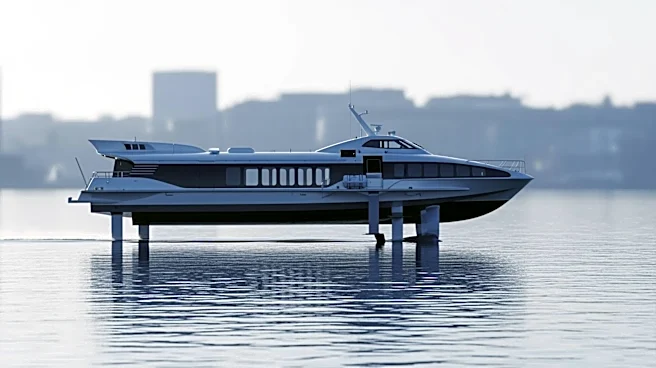
Vessev, a company specializing in electric passenger vessels, has announced the launch of a hydrofoiling network in Hobart, Australia. This initiative, named Fly Derwent, aims to utilize the Derwent River for urban transport, offering a zero-emissions
alternative. The network will initially feature Vessev's VS-9 vessels, with plans to expand to a fleet of VS-12 vessels. These electric hydrofoiling vessels are designed to provide a smooth and stable ride, minimizing environmental impact. The project is powered by Tasmania's renewable energy grid, which includes hydrogeneration, wind, and solar power. The VS-9 can carry 10 passengers over 50 nautical miles at 25 knots, while the VS-12 can accommodate 30 passengers. The first VS-9 is expected to arrive in Hobart in early 2027, with the VS-12 fleet to follow. Vessev is also exploring similar projects globally to reduce traffic and environmental impact by transforming underutilized waterways into transit networks.
Why It's Important?
The launch of Vessev's hydrofoiling network represents a significant step towards sustainable urban transport solutions. By leveraging renewable energy and innovative vessel design, the project aims to reduce traffic congestion and environmental impact in urban areas. This initiative could serve as a model for other cities looking to enhance public transportation while minimizing carbon emissions. The use of waterways for transit not only offers an efficient alternative to traditional road transport but also aligns with global efforts to combat climate change. The success of this project could encourage further investment in similar technologies, potentially transforming urban transit systems worldwide.
What's Next?
As Vessev prepares to launch its hydrofoiling network in Hobart, the company is likely to focus on expanding its fleet and optimizing operations. The arrival of the VS-9 vessels in early 2027 will mark the beginning of this new transit system, with the VS-12 fleet to follow. Vessev's collaboration with cities and operators globally suggests that similar projects could be initiated in other regions, further promoting the use of waterways for urban transport. Stakeholders, including local governments and environmental groups, may closely monitor the project's impact on traffic and emissions, potentially influencing future urban planning and transport policies.