







What's Happening?
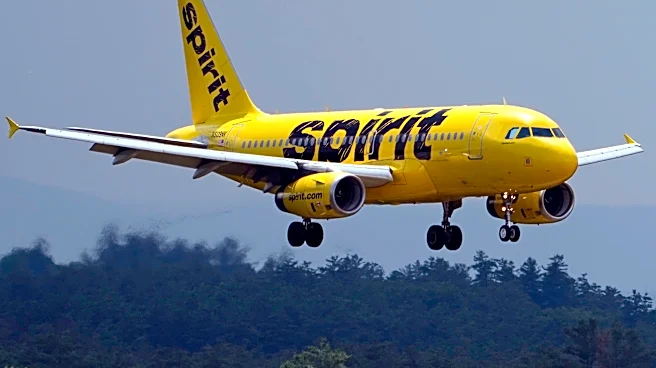
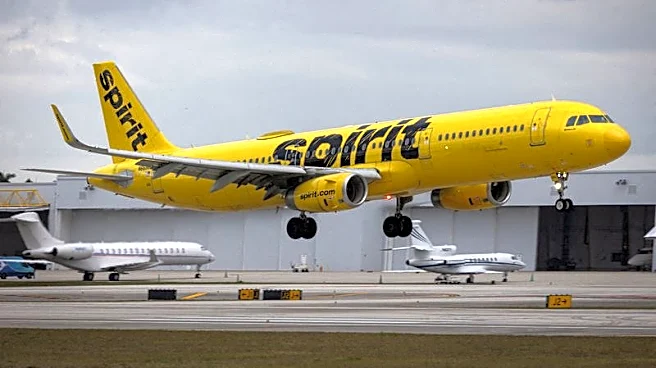
Spirit Airlines, known for its low-cost travel model, has ceased operations after 34 years. The airline, which once had a market value of approximately $5.5 billion, announced its shutdown following its final flight from Detroit to Dallas. The closure
comes after two bankruptcy filings and a failed attempt to secure a bailout from the Trump administration. The airline struggled with rising jet fuel prices due to the Iran war, which severely impacted its financial stability. On its last day, Spirit Airlines managed to fly over 50,000 passengers and is working to return more than 1,300 crew members home. The shutdown has resulted in the loss of jobs for about 17,000 employees, many of whom were informed through media reports.
Why It's Important?
The shutdown of Spirit Airlines marks a significant shift in the U.S. airline industry, particularly affecting the low-cost travel segment. Spirit's business model, which influenced major airlines to adopt similar pricing strategies, has been a key player in making air travel more accessible. The closure highlights the vulnerability of airlines to external economic pressures, such as fluctuating fuel prices and geopolitical tensions. The loss of Spirit Airlines will likely lead to reduced competition in the low-cost carrier market, potentially resulting in higher fares for consumers. Additionally, the sudden job losses will have a ripple effect on the economy, affecting not only the employees but also the communities that relied on the airline's operations.
What's Next?
In the wake of Spirit Airlines' shutdown, other airlines like United, Frontier, and JetBlue are stepping in to accommodate stranded passengers by capping fares and expanding services. The airline's bankruptcy proceedings will continue, with efforts to ensure that employees receive due compensation. The industry may see further consolidation as remaining carriers vie for Spirit's market share. The government and industry stakeholders will likely reassess strategies to support airlines facing similar financial challenges, especially in volatile economic conditions.