



What's Happening?
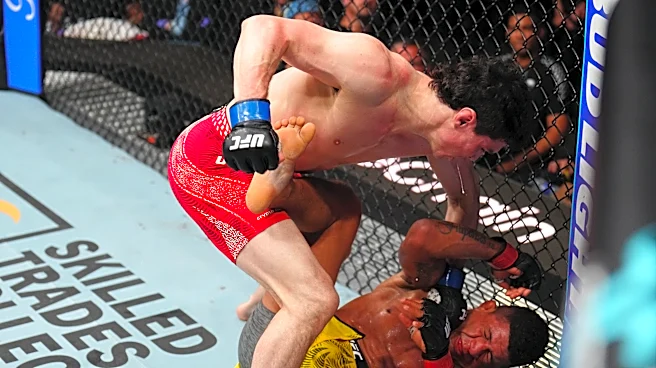
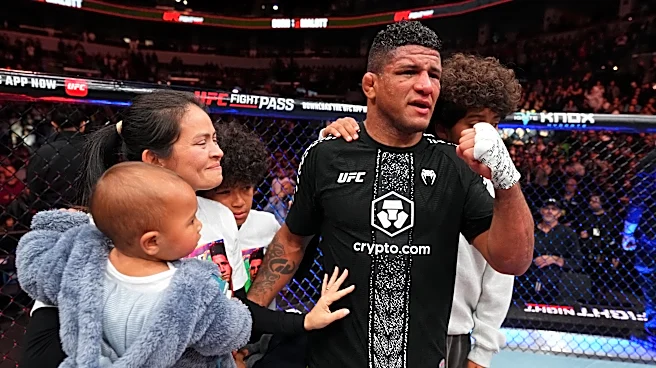
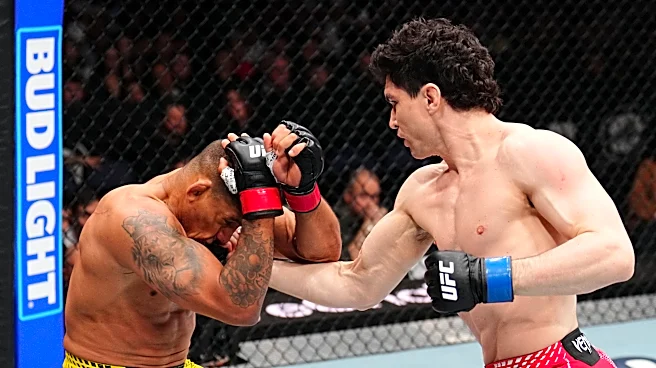
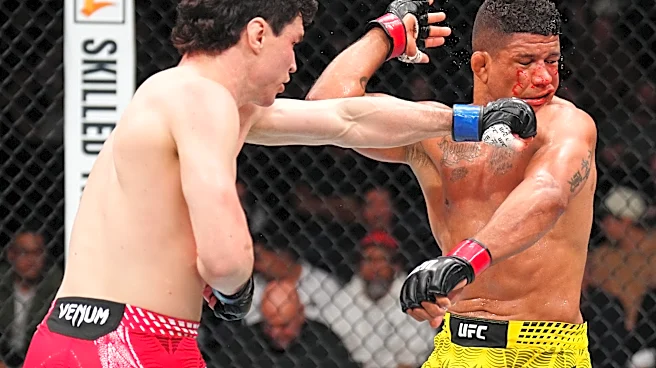
Gilbert Burns, a prominent figure in the UFC, has announced his retirement from mixed martial arts following a loss to Mike Malott at UFC Winnipeg. Burns, who began his journey in combat sports through Brazilian jiu-jitsu, transitioned to MMA in 2012
and quickly made a name for himself with seven first-round finishes. He joined the UFC in 2014 and achieved significant success, including a six-fight winning streak that earned him a welterweight title shot against Kamaru Usman in 2021. Despite a promising start in the title fight, Burns was defeated, marking the beginning of a challenging period in his career. Over the last five years, Burns faced a series of defeats, culminating in his decision to retire at the age of 39. Throughout his career, Burns was known for his sportsmanship and dedication, earning respect from fans and peers alike.
Why It's Important?
Gilbert Burns' retirement marks the end of an era for a fighter who has been a staple in the UFC welterweight division. His career highlights the challenges and triumphs of professional fighters, showcasing the dedication required to compete at the highest levels. Burns' journey from a jiu-jitsu practitioner to a UFC title contender underscores the diverse paths athletes can take in combat sports. His retirement also opens discussions about the physical and mental toll of prolonged competition in MMA, as well as the transition athletes face when leaving the sport. Burns' legacy will likely inspire future fighters, particularly those from jiu-jitsu backgrounds, to pursue careers in MMA.
What's Next?
While Gilbert Burns has retired from active competition, he is expected to remain involved in the sport, potentially as a coach or mentor to upcoming fighters. His experience and knowledge could be invaluable to younger athletes, particularly those training in Brazilian jiu-jitsu. Additionally, Burns may continue to participate in jiu-jitsu and submission grappling competitions, where he has previously achieved significant success. The UFC community and fans will likely continue to celebrate his contributions to the sport, and his influence may extend beyond the octagon as he supports the next generation of fighters.
Beyond the Headlines
Burns' retirement highlights the broader issue of athlete longevity and the decision-making process regarding when to retire. It raises questions about the support systems in place for athletes transitioning out of competitive sports and the opportunities available to them post-retirement. Burns' career also reflects the global nature of MMA, with athletes from diverse backgrounds and disciplines contributing to the sport's growth. His story may encourage discussions about the role of martial arts in personal development and the potential for athletes to impact their communities positively.