





What's Happening?
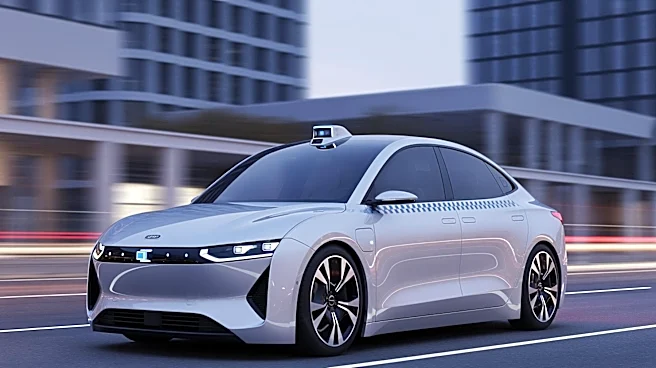
Waymo, a subsidiary of Alphabet, has introduced a new computer model designed to improve the accuracy of its autonomous driving software by comparing it with human driving capabilities. This model, developed in collaboration with TU Delft, is based on a framework
called 'active inference,' which simulates a driver's ability to anticipate future scenarios and act to achieve the safest outcome. The research, published in Nature Communications, aims to provide a more realistic benchmark for autonomous systems by reflecting how skilled human drivers react in potential collision scenarios. This advancement is expected to enhance the safety features of Waymo's robotaxis, which are currently expanding into more cities and facing increased regulatory scrutiny.
Why It's Important?
The development of this new model is significant as it addresses a critical need for autonomous vehicle companies to accurately assess and improve the safety of their systems. By providing a more human-like benchmark, Waymo can better evaluate and enhance the performance of its robotaxis in real-world scenarios. This is particularly crucial as the company scales its operations and navigates regulatory challenges. The model's ability to simulate a wide range of road user behaviors and its application to large test sets could lead to significant advancements in autonomous driving technology, potentially reducing accidents and improving public trust in these systems.
What's Next?
Waymo plans to use this model to further refine its autonomous driving systems and is encouraging collaboration by making the research code available under an academic, non-commercial license. This openness to collaboration could accelerate advancements in the field and lead to broader industry improvements. As Waymo continues to expand its services, the company will likely face ongoing scrutiny from regulators and the public, making the successful implementation of this model crucial for its future operations.