



What's Happening?
The Coachella Valley Music and Arts Festival, held annually at the Empire Polo Club, faced significant disruptions due to strong winds on Friday night. The festival, which attracts approximately 125,000 attendees each weekend, experienced weather conditions
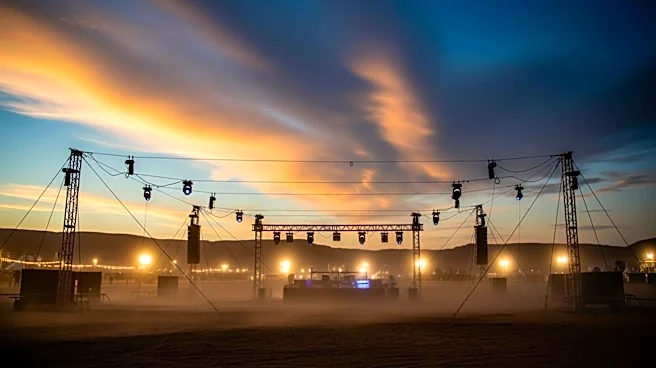
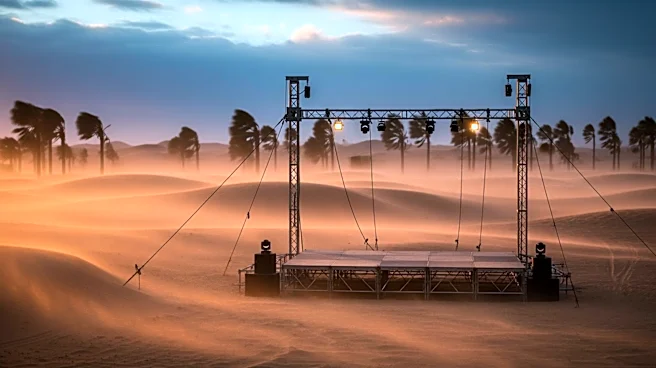
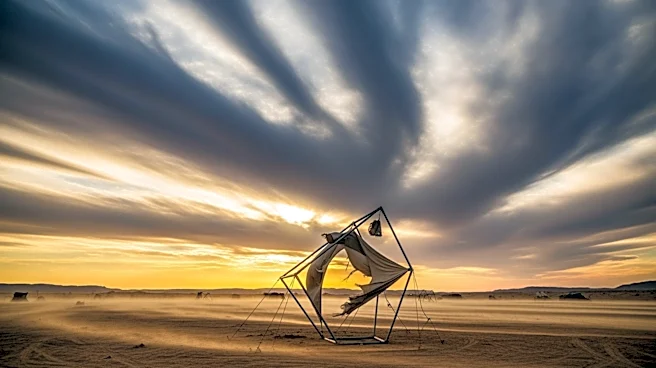
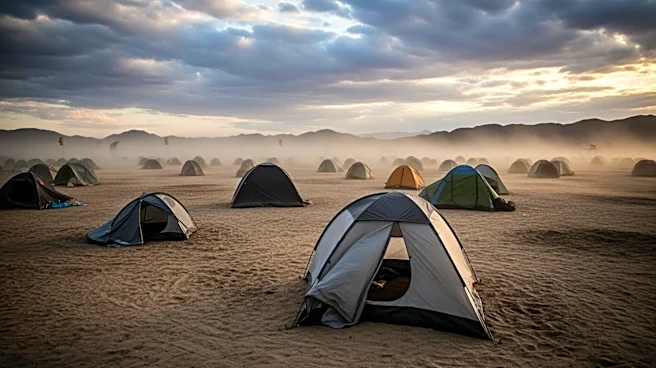
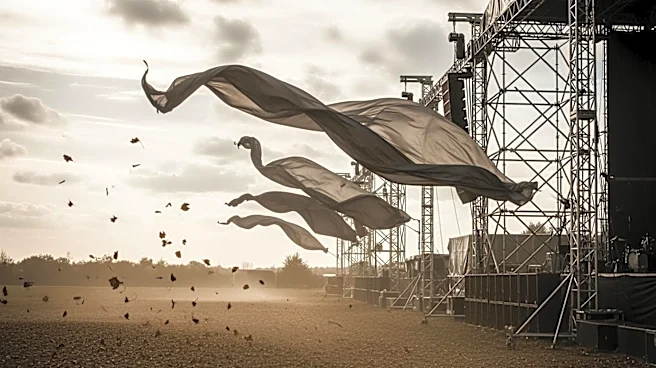
severe enough to cause the cancellation of performances. Notably, EDM artist Anyma had to cancel his performance on the festival's largest stage due to safety concerns related to the wind. The festival organizers, in collaboration with Anyma, prioritized attendee safety in making this decision. Additionally, the Do Lab stage, known for its colorful fabric shade structures, was closed for the night after reports of a speaker potentially falling. The campsite was also affected, with tents and canopies being blown over by the gusts. Meteorologist Isaac Longley reported wind gusts reaching 35 to 40 mph during the late afternoon, coinciding with performances on the main stages.
Why It's Important?
The disruptions at Coachella highlight the impact of weather on large-scale outdoor events, emphasizing the need for robust contingency planning to ensure safety. The cancellation of performances not only affects artists and attendees but also has economic implications for vendors and local businesses that benefit from the influx of festival-goers. The situation underscores the importance of real-time weather monitoring and communication between festival organizers and performers to mitigate risks. The decision to prioritize safety over scheduled performances reflects a growing awareness and responsibility towards attendee welfare in the face of unpredictable weather patterns.
What's Next?
As the festival continues through the weekend, similar weather conditions are expected, with forecasts predicting gusts up to 30 mph. Attendees are advised to secure their tents and prepare for potential further disruptions. The festival organizers will likely continue to monitor weather conditions closely and communicate any necessary changes to the schedule. The ongoing situation may prompt discussions on improving infrastructure and safety measures for future events, particularly in regions prone to such weather conditions.