
What's Happening?
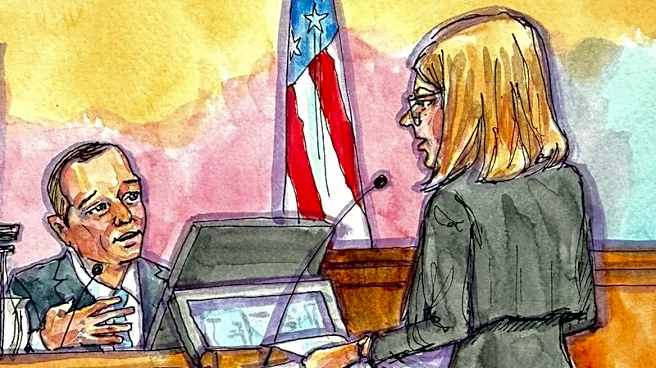
Mira Murati, the former head of technology at OpenAI, has accused CEO Sam Altman of being dishonest and creating chaos within the company. Her testimony was presented in a federal court in Oakland, California,
as part of Elon Musk's lawsuit against OpenAI. Murati claimed that Altman fostered an environment of strife among executives, undermining her ability to perform her duties. She expressed concerns about Altman's inconsistent communication, stating that he would say different things to different people. The lawsuit, which has captured the attention of Silicon Valley, alleges that Altman and OpenAI's President Greg Brockman prioritized commercial interests over the company's founding mission of public benefit. OpenAI has denied these allegations, arguing that Musk supported its transition to a for-profit model. Murati, who briefly served as CEO after Altman's temporary dismissal in 2023, has since left OpenAI to start her own AI company.
Why It's Important?
The allegations against Sam Altman highlight significant governance and ethical challenges within one of the leading companies in artificial intelligence. The outcome of this lawsuit could have far-reaching implications for the tech industry, particularly in how AI companies balance profit motives with ethical considerations. If Musk's lawsuit succeeds, it could set a precedent for holding tech leaders accountable to their founding missions, potentially influencing corporate governance standards across the industry. The case also underscores the intense competition in the AI sector, with major players like Google and Microsoft closely monitoring developments. The internal turmoil at OpenAI could impact its ability to retain top talent and maintain its competitive edge in the rapidly evolving AI landscape.
What's Next?
The trial is ongoing, and its outcome could lead to significant changes at OpenAI, including potential leadership shifts and a reevaluation of its business model. If the court rules in favor of Musk, OpenAI may be required to revert to a non-profit status, which could alter its strategic direction and partnerships. The case may also prompt other tech companies to reassess their governance structures and ethical commitments. Stakeholders, including investors and industry peers, will be closely watching the proceedings for any indications of broader industry impacts.