





What's Happening?
Lincoln Riley, head coach of the USC Trojans, is under increasing pressure as he enters the 2026 college football season. Riley's projected salary of $11.5 million places him among the highest-paid coaches in the nation, tied for sixth with Clemson's
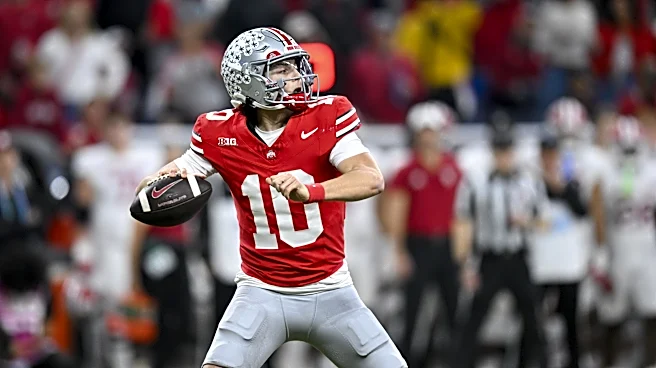
Dabo Swinney. Despite this, Riley has faced criticism for his inability to secure wins against top-ranked teams, a challenge that persists as USC prepares for a demanding schedule. The Trojans will face formidable opponents such as Oregon, Washington, and Ohio State at home, and Penn State, Wisconsin, and Indiana on the road. Riley's performance in these matchups is crucial, as the team aims to qualify for the College Football Playoff and contend for a national championship.
Why It's Important?
The performance of Lincoln Riley and the USC Trojans in the upcoming season holds significant implications for the college football landscape. Riley's high salary reflects the expectations placed on him to deliver results, particularly in high-stakes games against top-tier teams. Success in these matchups could enhance USC's reputation and competitiveness in the Big Ten Conference, potentially leading to a playoff berth. Conversely, failure to meet these expectations could result in increased scrutiny and pressure on Riley, impacting his standing among elite college football coaches. The outcomes of these games will also influence the broader dynamics of college football, affecting rankings, recruitment, and the financial aspects of the sport.
What's Next?
As the 2026 season unfolds, all eyes will be on Lincoln Riley and the USC Trojans as they navigate their challenging schedule. Key games against Oregon and Ohio State will be pivotal in determining the team's success and Riley's ability to outcoach his counterparts. The performance of quarterback Jayden Maiava will also be critical, as his play could significantly impact USC's chances of winning crucial matchups and securing a spot in the College Football Playoff. The season's progression will likely prompt reactions from fans, analysts, and stakeholders, influencing future decisions regarding coaching strategies and team management.