







What's Happening?
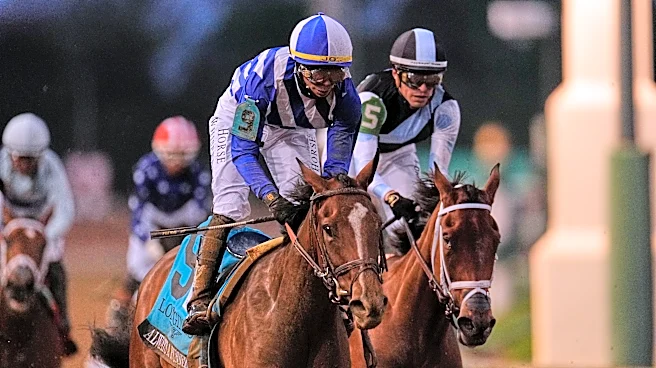
The Kentucky Oaks, a key event during the Kentucky Derby weekend, was broadcast in primetime for the first time, leading to dissatisfaction among Louisville locals. Traditionally held in the early evening, the race was moved to a later slot to enhance
television ratings, resulting in empty seats at Churchill Downs. Local businesses, particularly restaurants, expressed concern over the impact on their operations, as the late start discourages racegoers from dining out post-event. Pat Francis, a local steakhouse owner, closed his business in protest, criticizing the shift as a corporate cash grab that undermines community involvement. The decision to air the Oaks in primetime will continue for at least six years, reflecting a broader trend of prioritizing television appeal over local traditions.
Why It's Important?
The shift to primetime broadcasting of the Kentucky Oaks highlights the growing influence of television networks on traditional sporting events. This change affects local businesses that rely on the influx of visitors during the Derby weekend, potentially reducing their revenue. The move underscores a broader trend where media companies prioritize ratings and advertising revenue over community engagement and tradition. This situation exemplifies the tension between commercial interests and local culture, raising questions about the future of community-centric events in the face of corporate influence.
What's Next?
With the Kentucky Oaks set to continue in primetime for the foreseeable future, local businesses may need to adapt their strategies to mitigate the impact of reduced post-race patronage. Community leaders and business owners might engage in discussions with Churchill Downs and NBC to explore potential compromises that could benefit both parties. Additionally, the ongoing dissatisfaction could lead to increased advocacy for preserving local traditions amidst commercial pressures.
Beyond the Headlines
The primetime shift of the Kentucky Oaks reflects a broader cultural shift in how sporting events are marketed and consumed. As media companies increasingly focus on creating content that appeals to a national audience, local traditions and community involvement may be sidelined. This trend raises ethical considerations about the balance between commercial success and cultural preservation, prompting discussions on how to maintain the integrity of local events while embracing modern media dynamics.