

What's Happening?
The Trump administration has launched a $12-billion initiative known as Project Vault, officially designated as the US Strategic Critical Minerals Reserve. This project is designed to provide a tactical buffer against supply shocks in critical minerals, which are essential for the defense, automotive, and technology sectors. The initiative combines a $10-billion facility from the Export-Import Bank of the United States (Exim) with approximately $2 billion in private capital. The goal is to create a 60-day strategic supply buffer for US consumers, potentially cushioning short-term disruptions and price volatility. According to Wood Mackenzie, while the project introduces a meaningful buffer against market volatility, it does not address the deeper
structural weaknesses in the US supply chain. The effectiveness of the stockpile will depend on how funds are allocated, with the potential to cover about 45 days of demand if spread across all 44 designated minerals.
Why It's Important?
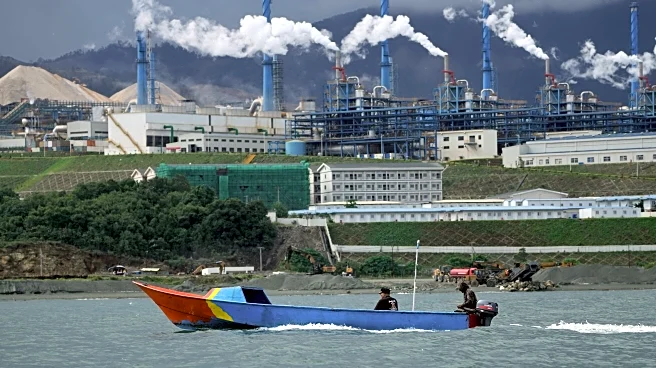
Project Vault is significant as it attempts to mitigate the US's dependency on imported critical minerals, a vulnerability highlighted by the US Geological Survey, which notes that the country is fully import-dependent for 15 critical minerals and relies on imports for more than half of the demand for an additional 32. The initiative could help emerging critical minerals projects secure funding by acting as a guaranteed buyer through Exim-supported offtake agreements. However, the project faces challenges such as procurement risks, where public announcements of the initiative and its budget could strengthen suppliers' negotiating positions, potentially increasing procurement costs. Additionally, there is a risk of geopolitical retaliation, as seen in past instances where China restricted exports of rare earths and graphite. The long-term viability of strategic stockpiles is also questioned, given historical precedents where Cold War-era reserves were liquidated due to increased carrying costs and shifting policy priorities.
What's Next?
The future of Project Vault will depend on its performance during its first significant supply shock. The initiative's durability will be tested during commodity downturns and potential geopolitical escalations. Operating expenses for Project Vault could exceed $1 billion annually, driven by warehousing, insurance, and financing costs. Unlike crude oil stored in the Strategic Petroleum Reserve, many critical minerals require specialized storage and periodic rotation. The project is seen as a tactical buffer rather than a comprehensive solution, but it plays a defined role within the broader US critical minerals strategy. The success of Project Vault will hinge on domestic permitting reform, stronger allied supply partnerships, and meaningful midstream capacity expansion to reduce underlying dependency on imports.