







What's Happening?
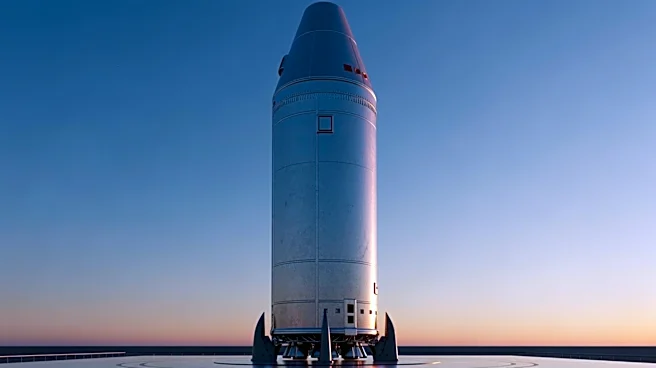
Blue Origin launched its New Glenn rocket, achieving a successful landing of its reusable booster stage on a drone ship. However, the mission encountered a problem as the AST SpaceMobile's BlueBird 7 satellite was placed into an orbit too low to be operational.
This satellite is part of a broader initiative to create a space-based cellular broadband network. Despite the satellite powering on successfully, its low orbit prevents it from functioning as intended. The satellite's cost is expected to be covered by insurance, mitigating financial losses for AST SpaceMobile. The company plans to continue its satellite deployment strategy, aiming for 45 satellites in orbit by the end of 2026.
Why It's Important?
The successful landing of the New Glenn rocket's booster stage marks a milestone in reusable space technology, potentially lowering costs for future space missions. However, the satellite's misplacement highlights the complexities and risks involved in space operations. For AST SpaceMobile, this incident delays its goal of expanding global cellular broadband access, which could impact its market position and strategic plans. The event underscores the need for precision in space missions and may influence future collaborations and trust in Blue Origin as a reliable launch provider. The broader space industry will be watching closely to see how Blue Origin addresses these challenges.
What's Next?
AST SpaceMobile intends to proceed with its satellite deployment schedule, utilizing various launch providers to achieve its target of 45 satellites by year-end. Blue Origin is also developing a prototype lunar lander for NASA's Artemis program, which aims to establish a sustainable human presence on the moon. The company will likely conduct a thorough review of the recent mission to identify and rectify the issues that led to the satellite's incorrect orbit. This analysis will be crucial for maintaining confidence among stakeholders and ensuring the success of future missions.