








What's Happening?
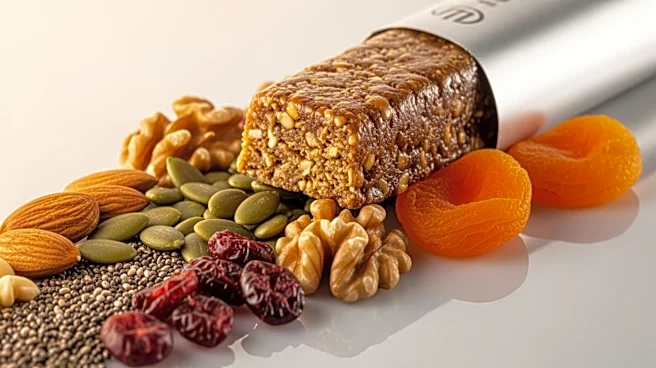
Moka Energy, based in Rochester, NY, has introduced a line of coffee bean bars designed to combine the convenience of a bar format with the caffeine content of roasted coffee beans. Each bar contains 90 mg of caffeine and is made from ingredients like
cocoa butter, tapioca fiber, and sunflower protein. This innovation is part of a broader trend in the functional foods market, where companies are focusing on natural caffeine sources to provide energy. Other brands, such as Mondelez International and Kellanova, have also launched energy bites and bars under their Clif and RXBAR brands, respectively, featuring plant-based proteins and natural ingredients. These products aim to offer sustained energy, particularly for athletes. Additionally, Esspo, a startup from New York, has developed a caffeinated beverage that combines soda and espresso, offering flavors like vanilla and cherry vanilla.
Why It's Important?
The development of functional foods with natural caffeine sources reflects a growing consumer demand for healthier energy options. As nearly 90% of Americans consume caffeine, these products cater to a significant market segment seeking alternatives to traditional energy drinks and coffee. The focus on natural ingredients and plant-based proteins aligns with broader health and wellness trends, appealing to consumers who prioritize clean labels and sustainable energy sources. This shift could impact the energy drink market by encouraging more companies to innovate with natural ingredients, potentially reducing reliance on synthetic caffeine and artificial additives.
What's Next?
As the functional foods market continues to evolve, companies may explore further innovations in product formats and ingredient combinations to meet consumer demand for convenient and healthy energy solutions. The success of these products could lead to increased competition among brands to capture market share, prompting further research and development in natural caffeine sources and plant-based proteins. Additionally, consumer feedback and preferences will likely influence future product offerings, with companies potentially expanding their portfolios to include more diverse flavors and formats.