





What's Happening?
Diehl Aerospace, a joint venture between Diehl Aviation and Thales, is exploring digital innovations that could reduce the need for flight attendants on aircraft. CEO Florian Maier discussed how connected cabin systems could enhance passenger safety and comfort,
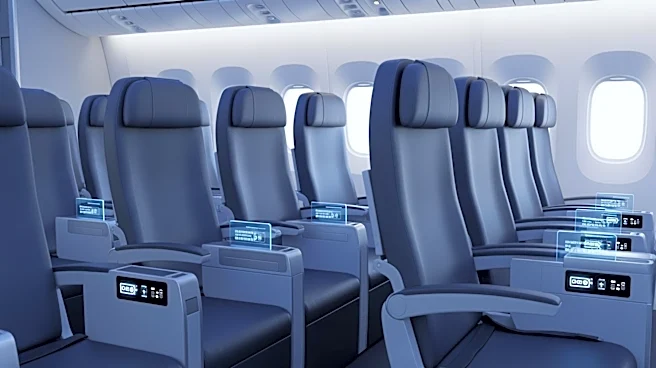
potentially allowing for fewer cabin crew members. Innovations include systems that indicate available baggage space, in-flight entertainment with ordering features, and connected safety belts that automate safety checks. These advancements could lower operational costs for airlines, though they would require approval from civil aviation authorities. The digital backbone of future aircraft, featuring powerful data concentrators and open architecture, would support these innovations.
Why It's Important?
The potential reduction in flight attendants could significantly impact airline operations and cost structures. By automating certain tasks, airlines could improve efficiency and passenger experience while reducing labor costs. However, this shift would require regulatory changes and could face resistance from labor unions concerned about job losses. The move towards digital solutions reflects broader trends in the aviation industry towards automation and enhanced passenger services.
What's Next?
The implementation of these technologies will depend on regulatory approvals and the willingness of airlines to invest in new systems. Aviation authorities, such as the European Union Aviation Safety Agency, will play a crucial role in certifying these innovations. Airlines may begin pilot programs to test the feasibility and safety of reduced cabin crew operations. The industry will need to address potential challenges related to passenger safety and service quality.
Beyond the Headlines
The shift towards digital cabin systems could lead to broader changes in airline staffing models and training programs. It may also influence passenger expectations and the competitive landscape in the aviation industry. As technology continues to evolve, airlines will need to balance innovation with safety and regulatory compliance.