







What's Happening?
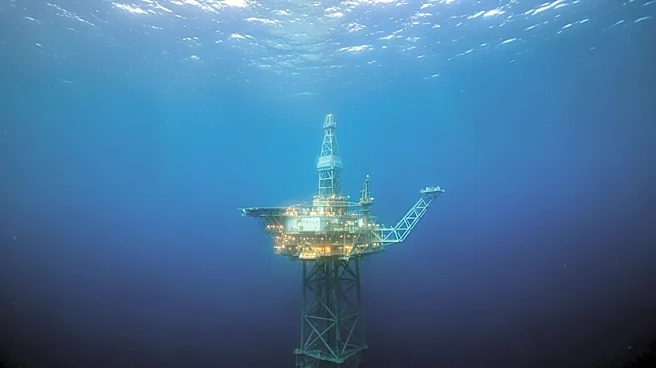
During the Offshore Technology Conference (OTC) 2026, Ivan Cima, COO of Welligence Energy Analytics, highlighted the growing significance of deepwater development in global oil supply. Despite a historic low in exploration investments, deepwater projects
are expected to fill a potential supply gap of up to 25 million barrels per day by 2040. Currently, deepwater production accounts for nearly 8% of global supply, with projections to increase to 10 million barrels per day in the early 2030s. This growth is contingent on key final investment decisions (FID) moving forward. The sector is targeting approximately 53 billion barrels of oil equivalent in conventional resources over the next two years, with deepwater exploration contributing significantly. Regions like South America and sub-Saharan Africa are seeing increased activity, with companies such as Shell and Chevron expanding their exploration portfolios.
Why It's Important?
The emphasis on deepwater development is crucial as it addresses the anticipated shortfall in global oil supply due to reduced exploration investments. This shift underscores the strategic importance of deepwater projects in maintaining energy security and meeting future demand. The focus on deepwater also highlights the industry's adaptation to economic and environmental challenges, as these projects are noted for their lower emissions intensity compared to other oil production methods. The move towards ultra-deepwater developments, despite their complexity, indicates a pursuit of higher-quality resources, which could lead to more efficient and sustainable production practices. This trend is significant for U.S. energy companies and stakeholders involved in offshore oil production, as it may influence investment strategies and regulatory policies.
What's Next?
The future of deepwater development will likely involve overcoming regulatory and environmental challenges, particularly in regions like Brazil, where such hurdles can impede progress. As competition for offshore capital intensifies, governments may need to offer more favorable fiscal terms to attract investment. The industry's reliance on standardized development concepts, such as Petrobras' use of replicant FPSOs, could streamline project execution and improve economic viability. Additionally, the debate over the cost-effectiveness of electrification in reducing emissions will continue to shape investment decisions. Stakeholders will need to balance environmental goals with economic considerations to ensure the sustainable growth of deepwater projects.
Beyond the Headlines
The push towards deepwater and ultra-deepwater projects reflects broader industry trends towards efficiency and sustainability. As these projects typically have lower emissions, they align with global efforts to reduce the carbon footprint of energy production. The industry's shift also highlights the role of technological advancements in overcoming the challenges of deeper offshore environments. The focus on replicable and standardized designs may set a precedent for future developments, potentially leading to more predictable and cost-effective project outcomes. This evolution in offshore oil production could influence global energy markets and contribute to a more resilient energy infrastructure.